Skip to content

Straphangers in Berlin

A Second Look at One of Europe's Great Transit Networks
There are no ads on the HIGH SPEED newsletter, and there never will be. (No A.I. slop, either!) It's entirely supported by readers like you. I publish it on a platform called Ghost, because I don't like the way Substack channels reader money to Nazis, fascists, white supremacists, and the likes of Andrew Tate. Unlike Substack, though, Ghost charges an annual fee. I want to keep HIGH SPEED going, but to pay that fee and continue doing the research, travel, and writing necessary to keep this up week in, week out, I need your support. I hope you'll consider becoming a paid member; you can follow the link to the sign-up portal here. And to all those who have already helped out by becoming a Rail Pass Holder or Founding Member, thank you!

// As part of a family vacation to Europe this summer, I spent three days in Berlin with my wife and kids this July. (I write about our overnight train trip from Basel to Berlin on the Nightjet sleeper train in this post.) I'd been to Berlin a couple of times before, most memorably in May 1990, as a footloose young man just out of university, and keen on taking a peek behind the crumbling Iron Curtain.

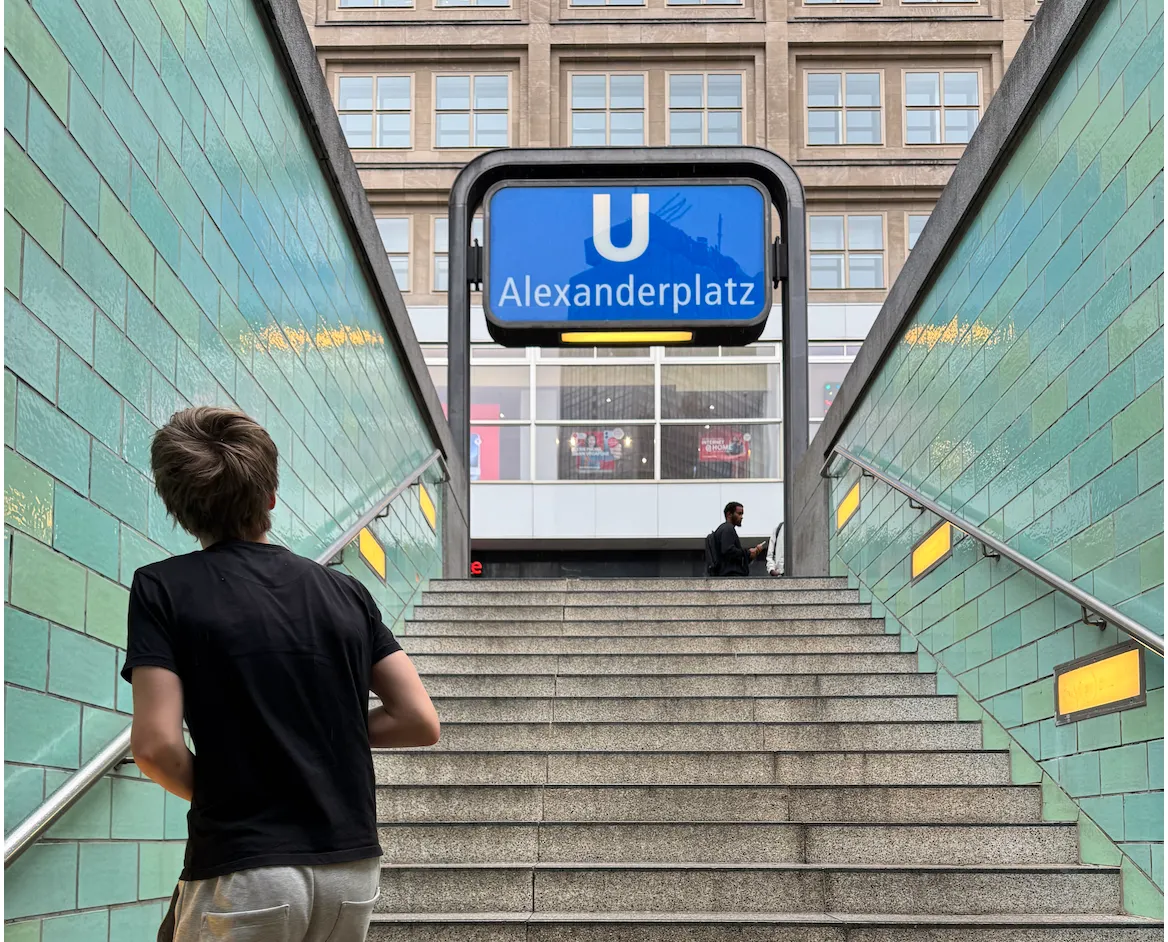
That was a crazy time: I arrived in Kreuzberg, where I was staying with a couple of Canadian artists, just in time for the May Day riots. Cars burning in the streets, tear gas, cops chasing black-garbed anarchists through the streets. I remember riding the S-Bahn to Alexanderplatz, negotiating with a street vendor to trade my West German Marks for a thick wad of Ostmarks, and then realizing there was nothing much to spend them on. (I thought better of buying a manual typewriter in a department store where the shelves were mostly empty: too big, and too heavy, to lug around in a backpack.)

💡
A handy, if not infallible, way to tell if you're in the old East Berlin: the presence of massive yellow trams, lumbering down the middle of broad boulevards.

A lot has changed since then, of course. The parts of East Berlin that I remember, which were then barren—or free—of billboards and all other forms of advertising, are now among the most attractive, and expensive, parts of the city. Even back then, I was a dedicated straphanger, and rode public transit to see Nick Cave and the Bad Seeds play in a vast circus tent (one of the most gripping pop music performances of my life), and took a train to Prague, where I saw Václav Havel addressing a crowd in Wenceslas Square, before boarding a bus to Paris, where my money ran out. (And I ended up living, for four years. But that's another story.)

First observation about Berlin, 2026: there's not as much graffiti (in 1990, every other Mietskaerne seemed to be a heavily-tagged squat), and there are far more McDonald's.

This post is for subscribers only

Subscribe

Already have an account? Sign In

Latest