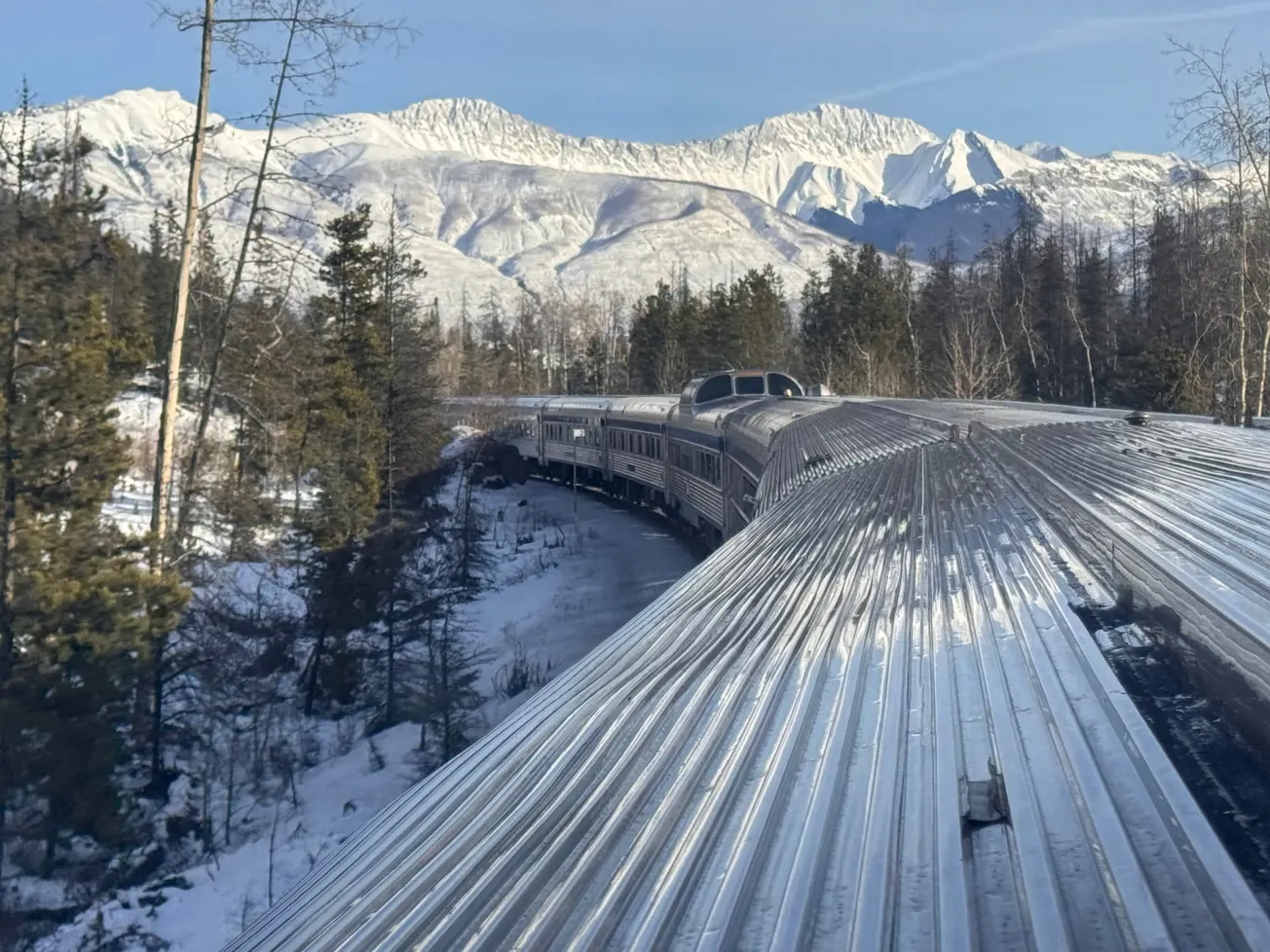
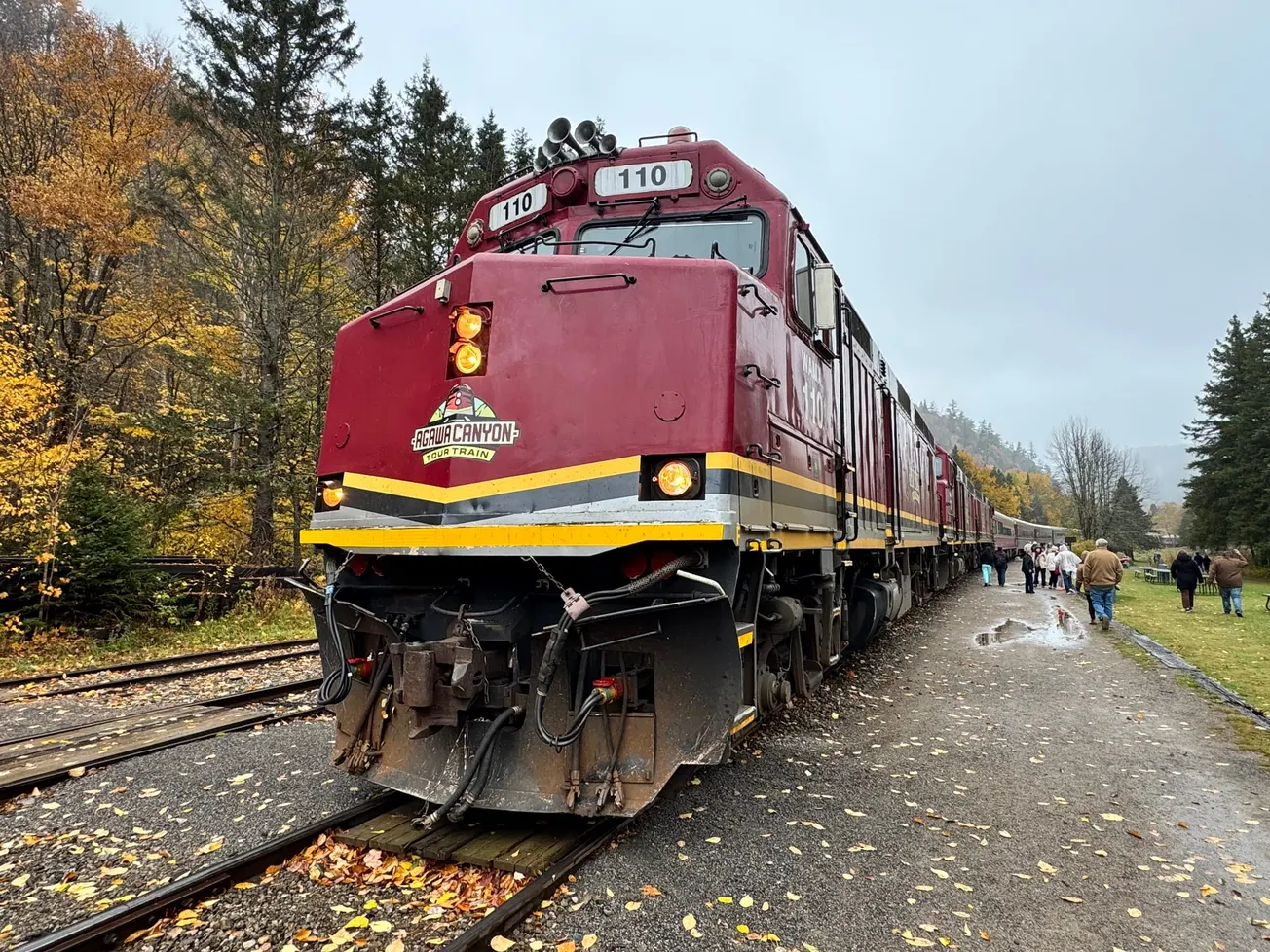
A big thank you to the 48 readers who’ve become Founding Members or Railpass Holders! Five weeks ago, I asked for your help to reach my goal to ride every passenger train in Canada for my book on the past, present, and future of passenger rail (to be published by House of Anansi). My advance only goes so far, so I’m counting on readers to fund my push to the end of steel.
My goal is 100 new paid members by the end of November: 52 to go! If you sign up, you’ll get the full version of every dispatch in your inbox each week, and free access to the archives. (And every Founding Member will be thanked for making the project possible in the book’s acknowledgements.) Sign up here.
The next mission is the North Wind, an Indigenous-managed railway that connects the north shore of the St. Lawrence River to Labrador. I'm thiiiiiiis close to having the fare covered for a return journey.
// "Daddy, What's a Train?" is the title of a song, first released in 1973, by Bruce "Utah" Phillips. (Some people may know the John Denver version, recorded for a kids album and released in August, 1997; Denver died two months later, in a plane crash.) The child in the song wonders if a train is bigger than a house, or if it's something he can ride. The idea being that a train is a creature he's never seen.
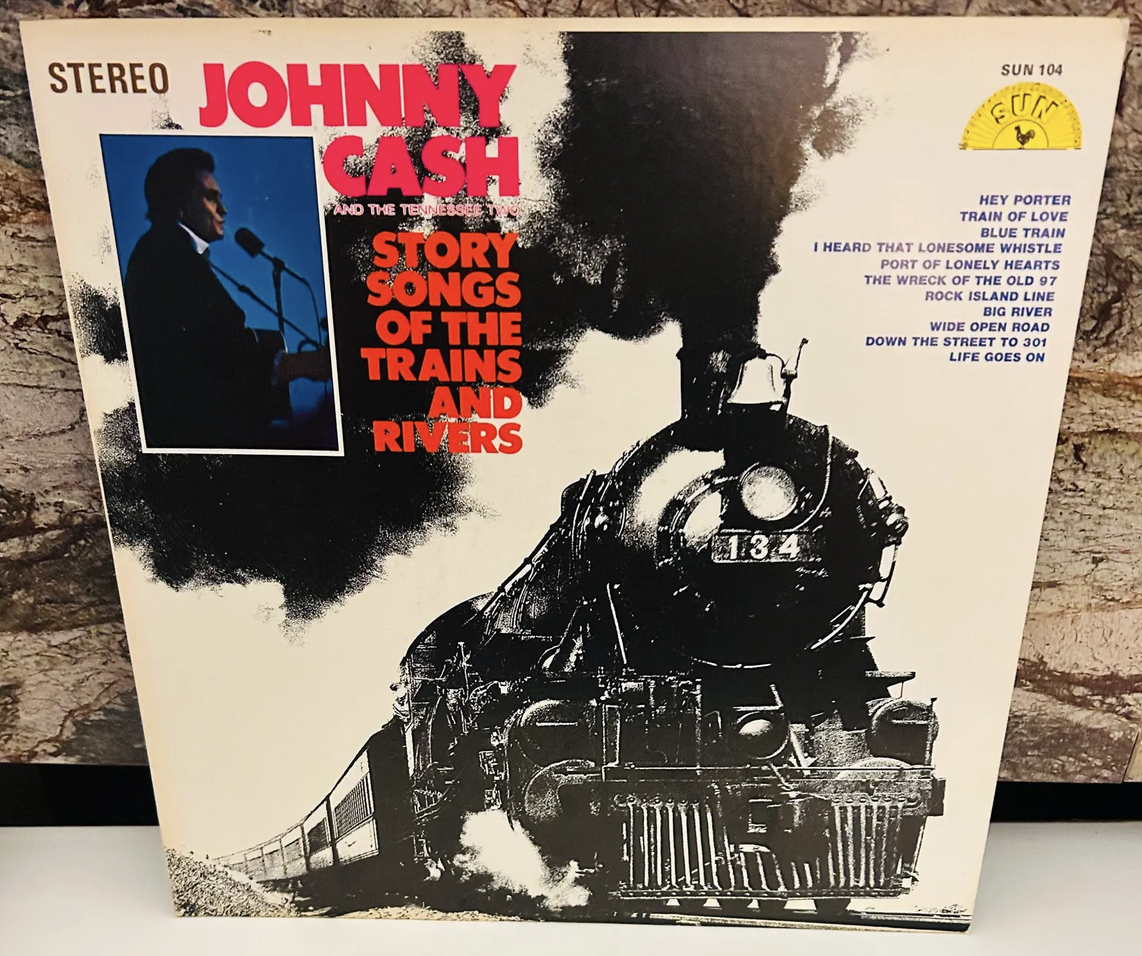
Phillips wrote the song for his son Duncan, at a time when passenger trains were disappearing from the North American landscape. Merle Haggard (he of the reactionary hit "Okie from Muskogee") recorded a sincere, if maudlin, concept album called "My Love Affair with Trains." It featured songs titled "Union Station" and "So Long Train Whistle," and spoken-word laments about how train stations, now deserted, were once the centre of every community in the nation. Train-nostalgia is a vein that Johnny Cash mined, repeatedly; give a listen to his lovely "I've Got a Thing About Trains" (1970). In Canada, the geographically-minded Stompin' Tom Connors and Hank Snow celebrated the Canadian rails in conventional country style. Gordon Lightfoot became the folkie troubadour of the tracks, his biggest hit being the "Canadian Railroad Trilogy" (1967) about the building of the transcontinental Canadian Pacific, and all the sweat and suffering attendant. (Note that he uses the Americanism "railroad." Look, Gord, in Canada, we say "railway"—eh?)
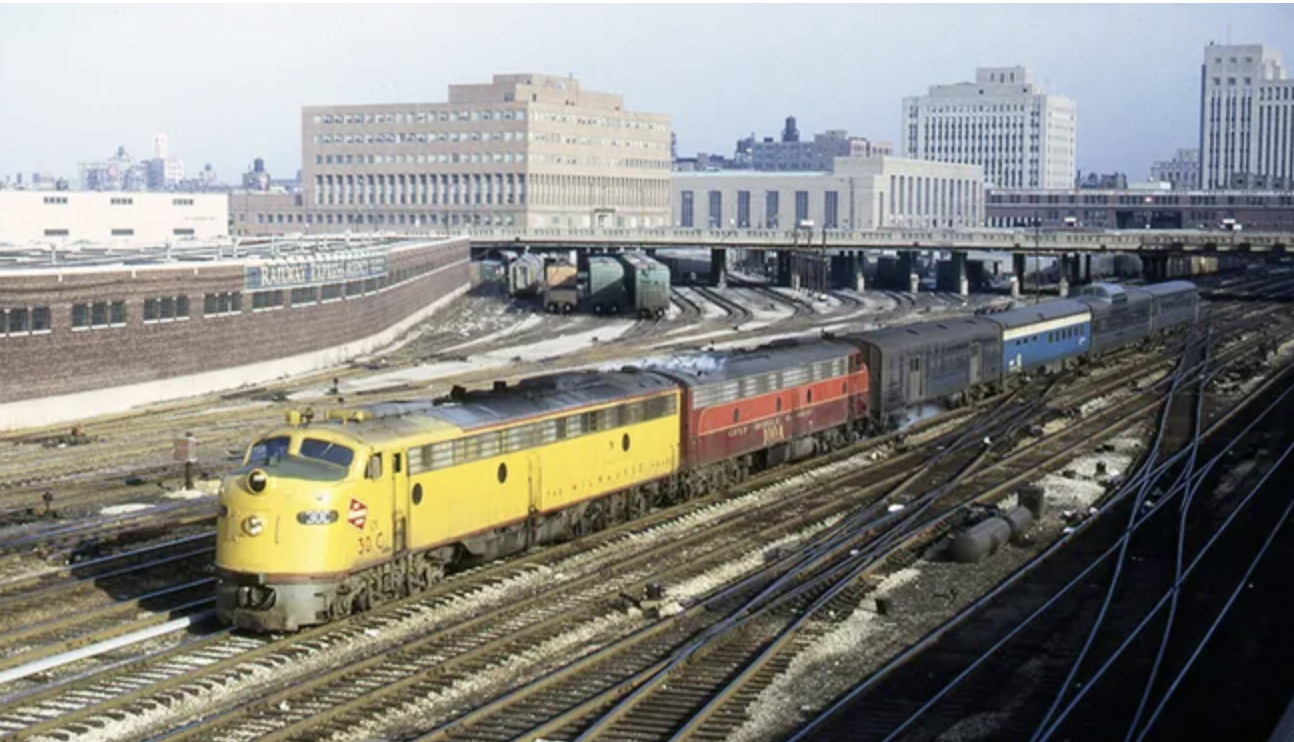
It makes sense that these songs were recorded when they were. Railways (and railroads!) were in crisis in North America in the 1970s. Penn Central, formed out of the merger of the mighty Pennsy (the Pennsylvania Railroad) and the New York Central, failed in 1970; at the time it was the largest corporate bankruptcy in US history. Competition from automobiles and airlines had long made passenger rail less profitable; by the early 1970s, once glamorous named trains, among them The 20th Century Limited, The Orange Blossom Special, and The Chief, had been retired, and those that were left limped along, neglected by private companies that saw them as a burden on their bottom line. In the United States, a half dozen bankrupt freight companies in the northeast were nationalized into Conrail; Amtrak, the national rail operator, was launched in 1971. (Nationalization, in the United States! And under Richard Nixon, a Republican president! The past is indeed another country...) In its early years, Amtrak was famous for running "rainbow trains," so-called because every car seemed to have a different livery, according to which railroad it originally came from.
These obituaries for the railways/roads were written prematurely; reports of the death of trains by singer-songwriters were obviously greatly exaggerated. In the year 2026, the trains are still running. By some measures, they're doing better than ever. Higher volumes of freight than ever are being transported, and the Class I roads are reliably profitable. To get a glimpse of a train, all my kids have to do is walk to our front porch, where, several times a day, they can see a freight pulling double-stacked containers on the CPKC line a block and a half north of our apartment.
They've also ridden passenger trains—lots of them—in Canada and Europe. But in that, my sons are unusual. The only reason they're familiar with trains is that their weirdo parents favour trains over planes and cars, and will go to great lengths to ride them. (It also helps that we live in Montreal, which remains the HQ of Via Rail and CN, and has held on to its status as one of Canada's few intercity rail hubs.) The reality is that very few people in North America have ever set foot on a train. The statistic I've heard cited, in books such as Tom Zoellner's Train and James McCommons's Waiting on a Train, is that just two percent of Americans have ever used an intercity (as opposed to a subway or commuter) train. People have definitely seen them, waiting at level crossings for a mile-long freight to pass, but the thought that they could actually be used as a practical mode of transportation has become—as Haggard and Phillips foresaw—deeply alien to a couple of generations of North Americans.
The statistics back this up. In 1944, at the height of passenger rail ridership, trains transported 60,336,000 passengers, at a time when the population of Canada was about 11.9 million. In 2025, with the population north of 41.8 million, there were just 4.4 million trips on inter-city passenger trains. About 90 percent of those trips were in the Quebec City-Windsor corridor. If you're a Canadian living outside of southern Ontario and Quebec, the likelihood that you've been on a passenger train (once again, as opposed to a SkyTrain, ION, C-Train, O-Train, or other form of urban transport) is vanishingly small.
Another key statistic: one century ago, one in seven unionized workers in this country worked for Canadian National, Canadian Pacific, or one of the other railways. Ask your parents or grandparents: they almost certainly know somebody who worked for the railways.
This lack of familiarity with trains has led to a persistent problem: railway illiteracy.
Unlike in Europe and Asia (and now, parts of Africa), where trains are a part of everyday life, in Canada and the United States people have forgotten, if they ever knew, the vocabulary of railways, and the concepts behind the words. People are well aware of the definition of "off-ramp," "gridlock," and "cloverleaf," but such train-related terms as "double-tracking," "wye" (a triangular track arrangement that allows a train to reverse direction) and "headways" (the time between trains) have largely disappeared from public consciousness.
Keep reading with a paid membership
HIGH SPEED is entirely reader-supported, with no ads and no AI slop. A paid membership unlocks this dispatch, every new one, and the full archive, and pays for the train tickets that make the reporting possible.
Rail Pass Holder
Full access to all dispatches, and the archive
$7 / month or $70 / year
- Every weekly dispatch, in full
- The complete archive
- Comment and join the conversation
- Behind-the-scenes on my latest book about riding Canadian trains
Founding Member
Help build HIGH SPEED from the ground up, and ride first class while you do it.
$10 / month or $100 / year
- Every weekly dispatch, in full
- Comment and join the conversation
- Complete access to archives
- Your name, and thanks, in the acknowledgments of my next book!
Already a member? Sign in