There are no ads on the HIGH SPEED newsletter, and there never will be. (No A.I. slop, either!) It's entirely supported by readers like you. I publish it on a platform called Ghost, because I don't like the way Substack channels reader money to Nazis, fascists, white supremacists, and the likes of Andrew Tate. Unlike Substack, though, Ghost charges an annual fee. I want to keep HIGH SPEED going, but to pay that fee and continue doing the research, travel, and writing necessary to keep this up week in, week out, I need your support. I hope you'll consider becoming a paid member; you can follow the link to the sign-up portal here. And to all those who have already helped out by becoming a Rail Pass Holder or Founding Member, thank you!
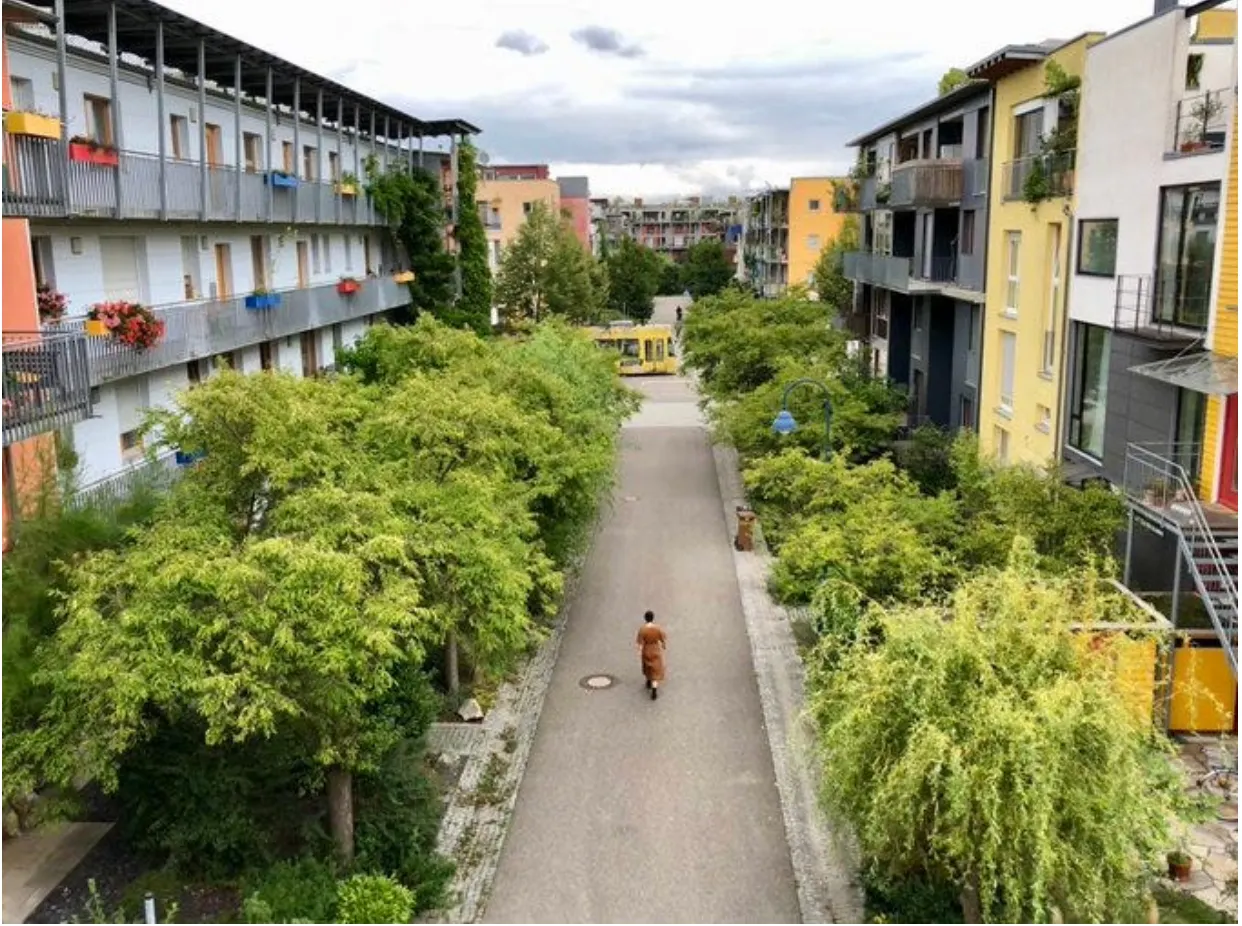
// It’s a question I’ve often asked myself after coming back from trips abroad. So many cities in Europe and Asia seem to have large areas where automobile traffic has been tamed. Where a passeggiata, or an evening stroll along a rambla, or a chat in the plaza, is a daily ritual. Or, as I wrote in last week’s dispatch about Tokyo, where kids and cats seemed to have free run of entire neighborhoods.
The easy response is: “Well, Old World cities are different.” Many have medieval centers, which were never designed for cars. Cities in the Americas, according to this rationale, are simply newer. They were built for automobile traffic.
OK, maybe not New York. Or Boston. Or Montreal, or Philadelphia, or Mexico City, or Toronto, or Portland, or downtown Los Angeles…well, anyway…you know what I mean: I’m talking about Phoenix. We can’t be like Europe or Asia because our cities were built after the coming of the automobile—you know, like Phoenix, Arizona!
Sure. Moving on…
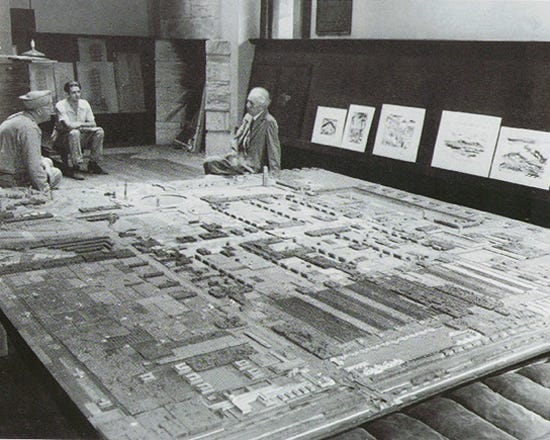
It is true that certain big cities in the Americas, particularly the ones whose principal growth occurred after the Second World War, are designed around freeways and the demonstrably insane notion of near-universal car use. (Not pointing a finger at Broadacre City, but ☛ FLW.) No question: those places can be harder—I’m not going to say impossible—to make into something less car-dependent.
For almost every other city, the key to change for the better—the real route towards creating enviably livable neighborhoods and cities—boils down to two horribly unglamorous words: Parking Reform. There are as many as 2.2 billion parking spaces in Canada and the United States. (We don’t actually know the exact figure, as Harry Grabar writes in his new book Paved Paradise.) And as Donald Shoup writes in his magnum opus The High Cost of Free Parking, the annual taxpayer subsidy to “free parking” in the US alone may be as high as $374 billion a year.
Keep reading: it’s free
Sign up with your email to read the rest of this dispatch, and get HIGH SPEED in your inbox every week.
Sign up freeAlready a member? Sign in