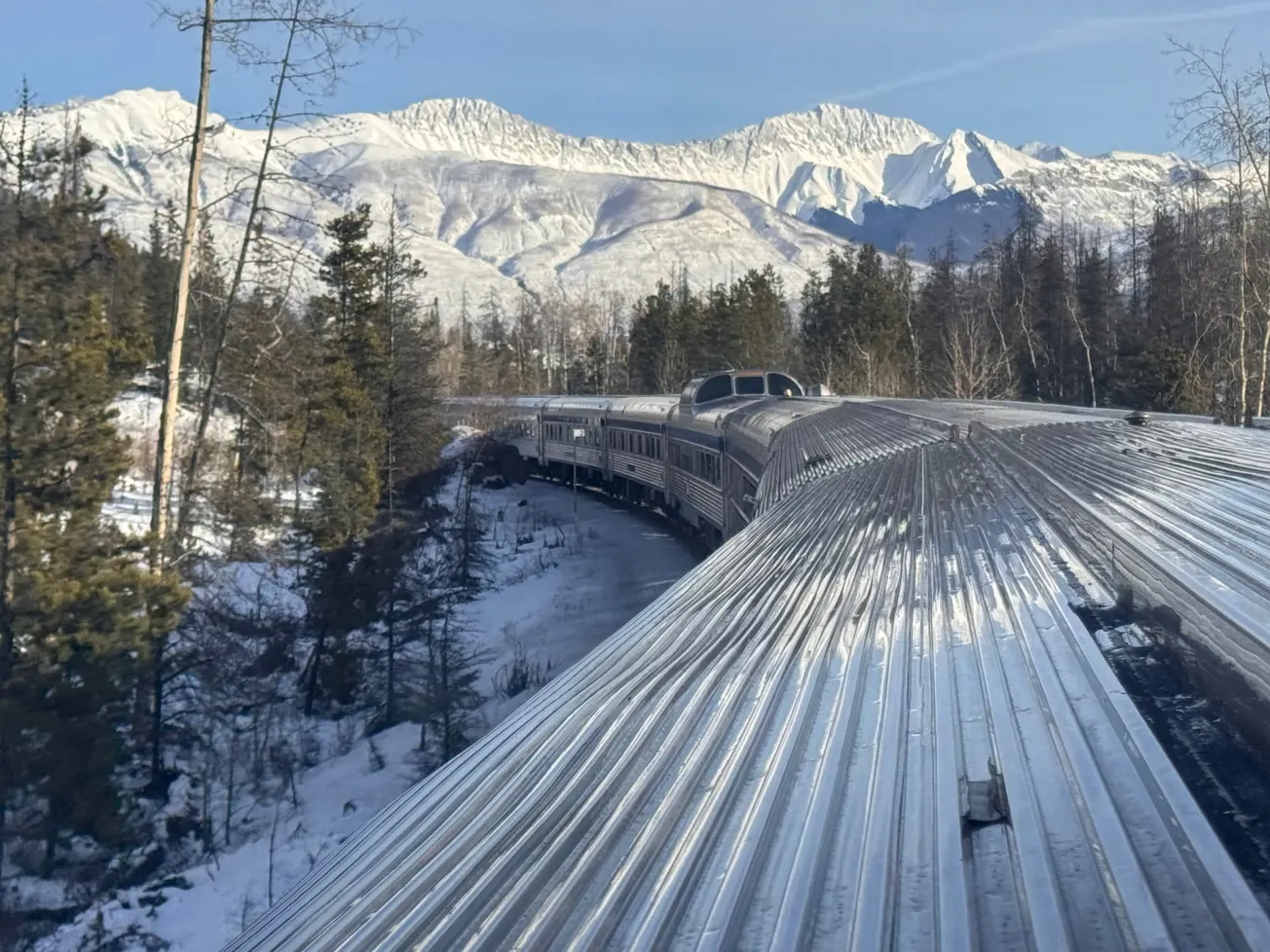
This year, I've pledged to ride every passenger train in Canada, from the White Pass & Yukon out of Carcross to The Ocean, calling at Halifax, for a book to be published by House of Anansi, tentatively subtitled "Twelve Trains that Explain Canada." I'm about 60 percent of the way there, with the Tshiuetin to Schefferville, the train to Churchill, the Algoma Central, and a few others still left to ride. The trouble is, my advance covered about two months of living expenses, and this is an awfully big country. If you're a free subscriber, please consider upgrading: as a Railpass Holder ($7 a month, or $70 a year), you'll get every dispatch in full, the run of the archives, and a seat in the comments; as a Founding Member ($10 a month, or $100 a year), you'll also see your name—along with my eternal gratitude—in the book's acknowledgements. If just 100 of you upgrade, I can reach the end of steel. (Curious? Click here for the whole story.) All aboard—en voiture!
To all those who upgraded in the last week, my sincere thanks. It's a huge morale boost! And it's already helping me do more on this project. Next week I head to Sault Ste. Marie, where I'll be riding the legendary Algoma Central Railway, which helped Group of Seven painters discover the stunning Canadian Shield landscape of northern Ontario. For updates, check out my posts on Instagram and Bluesky.
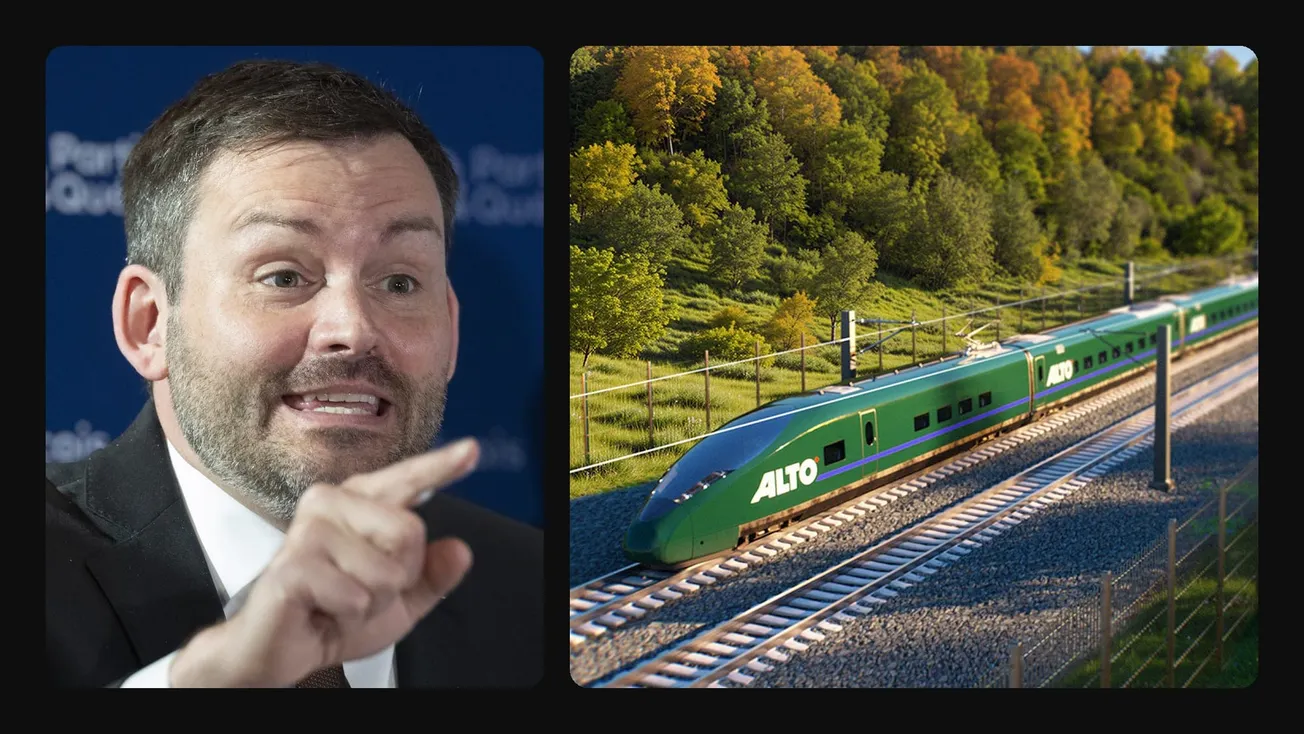
// It's been a long time coming, but North America is set to get its first purpose-built high-speed rail line. I'm referring, of course, to the Alto High Speed Rail project, currently in the planning phases in Canada. (I've covered the developing Alto story in posts here and here.) The only high-speed train in the United States is the Acela, but it runs on an existing corridor; as for the Brightline in Florida, which I rode last year, it also follows an existing, and unsecure d, corridor, and definitely doesn't meet any definition of high-speed. Alto is something new: it's what the French call an LGV, or ligne à grande vitesse, in reference to the corridor and its tracks, as opposed to a TGV, or train à grande vitesse, which describes the train itself. In the year 2026, we still don't have any LGVs on this side of the Atlantic.
This is good news for a whole bunch of reasons. Electric-powered trains are a fantastically energy-efficient mode of long-distance travel, reducing emissions, compared to planes and cars, by a factor of ten. (Though there are plenty of exceptions to the rule, as I discovered while writing last week's post.) Fifty percent of Canada's population lives within 50 kilometers of the proposed corridor, which connects Montreal and Toronto, metro areas with a combined population of 11.7 million. With up to 72 trains a day, Alto is talking about carrying 25 million passengers a year.
The 300 km/h trains would take a huge bite out of the highway traffic, and cut down on the highly-polluting short-haul flights—up to 94 a day—that currently connect Ottawa, Montreal, Quebec City, and Toronto. The service is almost certain to be profitable, with, according to some analysts, benefits of $27 billion for the national economy.
Alto also has widespread public support, across party lines, across the nation, and among people of all ages. Countrywide, an Abacus poll puts support at close to two-thirds, with even 58 percent of Conservative voters expressing a favorable opinion. Among Quebecers, support stood at 65%. (That said, the poll was conducted early in 2026, before anti-train protests by farmers in the Mirabel area made the news.)
Then why, you may well ask, did the Parti Québécois—who will form Quebec's next government after the October 5th provincial election—come out against the project during their campaign?
Keep reading: it’s free
Sign up with your email to read the rest of this dispatch, and get HIGH SPEED in your inbox every week.
Sign up freeAlready a member? Sign in