There are no ads on the HIGH SPEED newsletter, and there never will be. (No A.I. slop, either!) It's entirely supported by readers like you. I publish it on a platform called Ghost, because I don't like the way Substack channels reader money to Nazis, fascists, white supremacists, and the likes of Andrew Tate. Unlike Substack, though, Ghost charges an annual fee. I want to keep HIGH SPEED going, but to pay that fee and continue doing the research, travel, and writing necessary to keep this up week in, week out, I need your support. I hope you'll consider becoming a paid member; you can follow the link to the sign-up portal here. And to all those who have already helped out by becoming a Rail Pass Holder or Founding Member, thank you!
// ...They're just unevenly distributed. (1)
As of 2025, you can ride a high-speed train, at speeds of up to 249 miles (400 kms) per hour, in 28 countries around the world.
China has a network of 25,000 miles (40,000 kms) of high-speed track, all of it built since 2000. Spain, which has the world's second biggest network, has 2,500 miles (4,000 km) of high-speed tracks. Japan, the originator of the bullet-train, and France, homeland of the train à grande vitesse, boast about 2,000 miles (3,200 km) each.

As of 2025, the United States, the richest nation in the world—indeed, in the history of the world—has 85 miles (137 km) of true high speed lines. Morocco, Turkey, Saudi Arabia, Greece and Uzbekistan can all boast significantly more high-speed track mileage. Canada, my own country, has precisely zero miles. (Hey, what is that in kilometers? Hold my double-double: tappa-tappa-tappa, oh yeah, also fucking zero.)
The minimum threshold for high-speed rail (HSR), according to the European Union and the International Union of Railways, is 155 miles (255 kms) per hour. Both bodies allow an exception for trains running on existing tracks that have been upgraded to high-speed standards, thus lowering the threshold to 124 mph, or 200 km/h. By Japanese or Chinese standards, 124 mph is a joke: at that speed, an N700S shinkansen or one of China's new-model CR450s is barely starting to stretch its metallic legs.
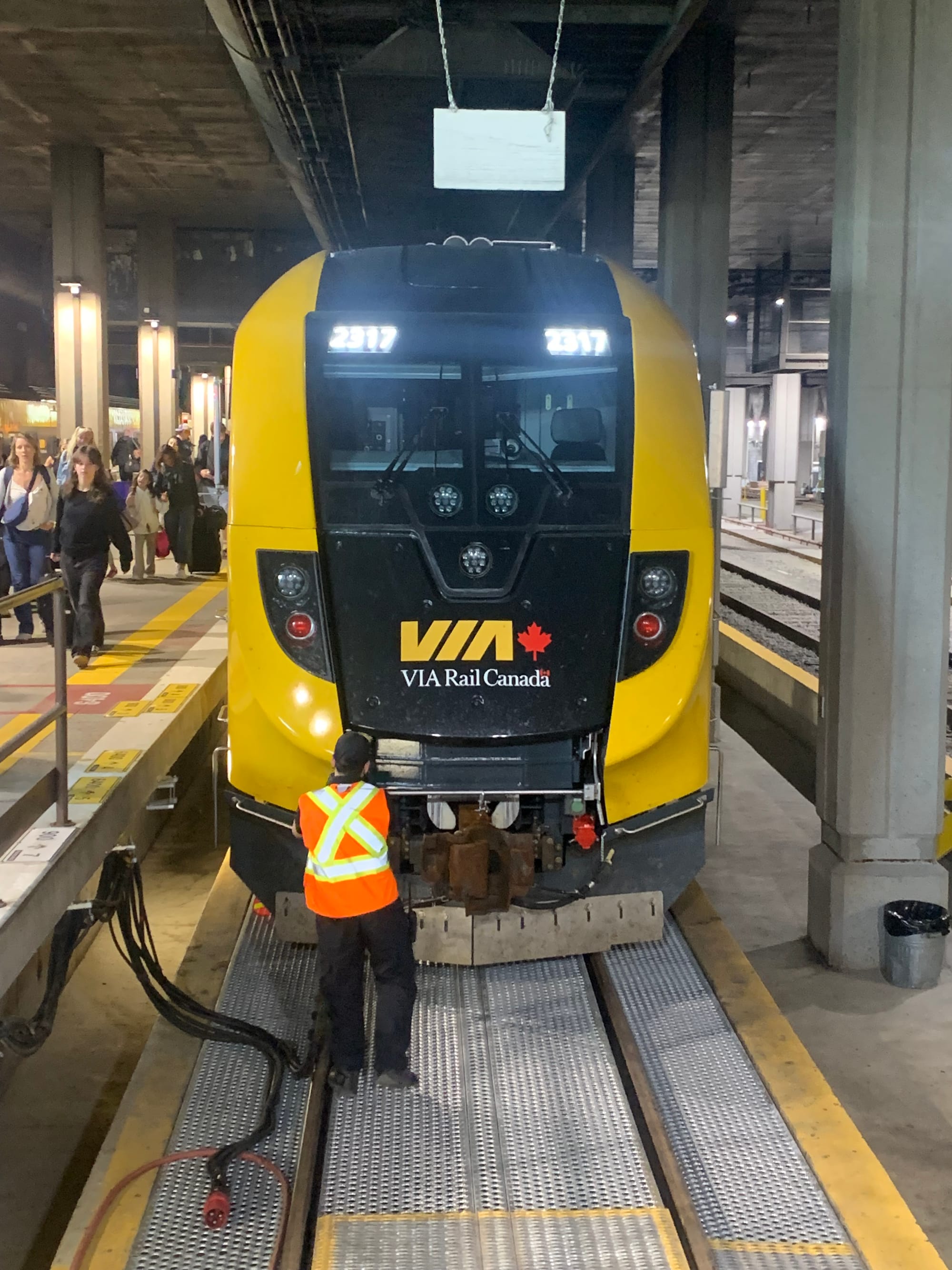
The Acela Express, which is all the United States has to boast in the way of HSR, currently doesn't meet the minimum for true high-speed: it tops out at 150 mph. (Briefly, somewhere around Providence. On a good day. If you're lucky.) In fact, on the entire 457-mile (735-km) run between D.C. and Boston, the Acela Express averages just 65 miles (105 kms) per hour. The fastest I've ever gone on a Canadian train, one of the Siemens Venture trainsets brought in with great fanfare by national operator Via Rail late in 2022, was 98 miles per hour (that's 158 km/h, eh?). At that speed, we did manage to whip by some cars backed up on the Trans-Canada Highway around Saint-Hyacinth, which was certainly gratifying. Though soon enough we were slowing down to negotiate the agonizingly poky approach to Montreal's Central Station.
Here's the crazy thing: twenty-first century North America doesn't even measure up to the standards of twentieth century North America. Back in the 1960s, high-powered Metroliners made by Philadelphia’s Budd Company were able to reach 160 miles (257 kms) per hour on the Northeast Corridor. Up until 1982, the TurboTrain, a lightweight gas-turbine train, made the run from Toronto to Montreal in an hour less than trains takes today, topping out at 170 miles (274 kms) per hour. (Well, sometimes, when it wasn't busy running into milk trucks).
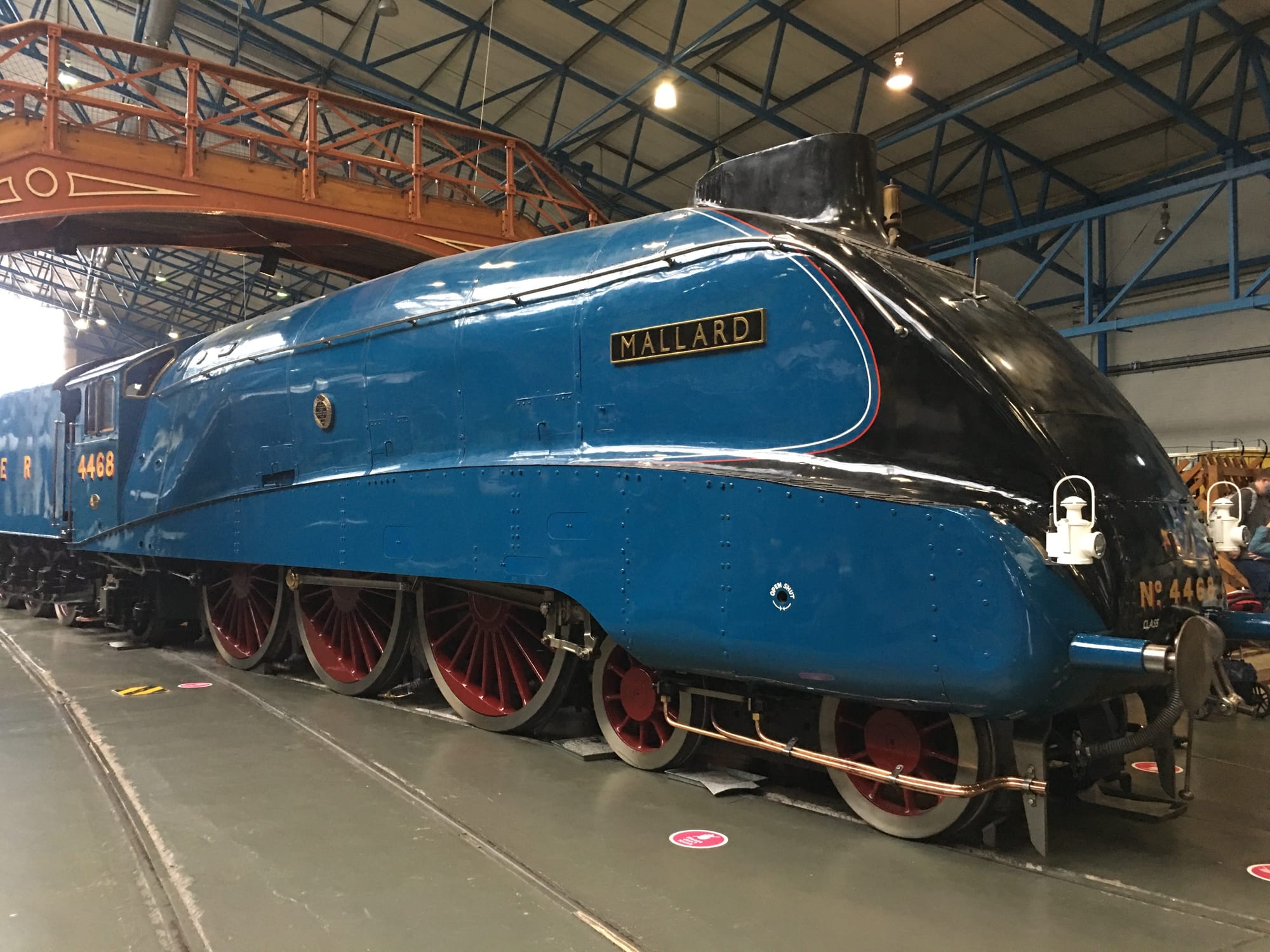
Even in the age of steam traction, trains were capable of remarkably high speeds. In England, the North Eastern Railway’s famed locomotive, the Mallard set a record for a steam-powered train, reaching 126 miles (202.8 kms) per hour in 1938. And she is one bonnie lass. I got to see her at the fantastic National Rail Museum in York, in all her glossy glory.
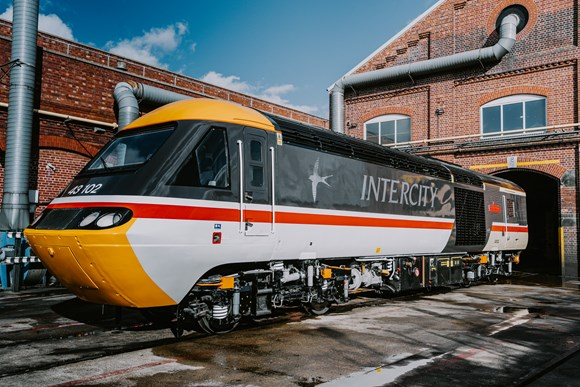
The record for a diesel-powered train, which still stands, was also set by a British locomotive, an HST, aka an InterCity 125, which topped out at 148 miles (239 kms) per hour in 1987. That's the very train that pulled off the feat, above; it's also found a home at the National Rail Museum. Of course, for electric-powered trains, the records set by steam and diesel trains are laughable—in the first decade of the 20th century, German electric locomotives were easily hitting 130 miles (210 kms) per hour without breaking a sweat.
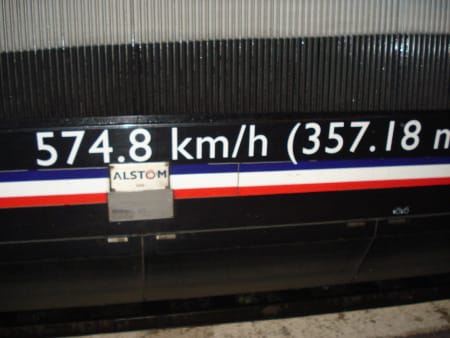
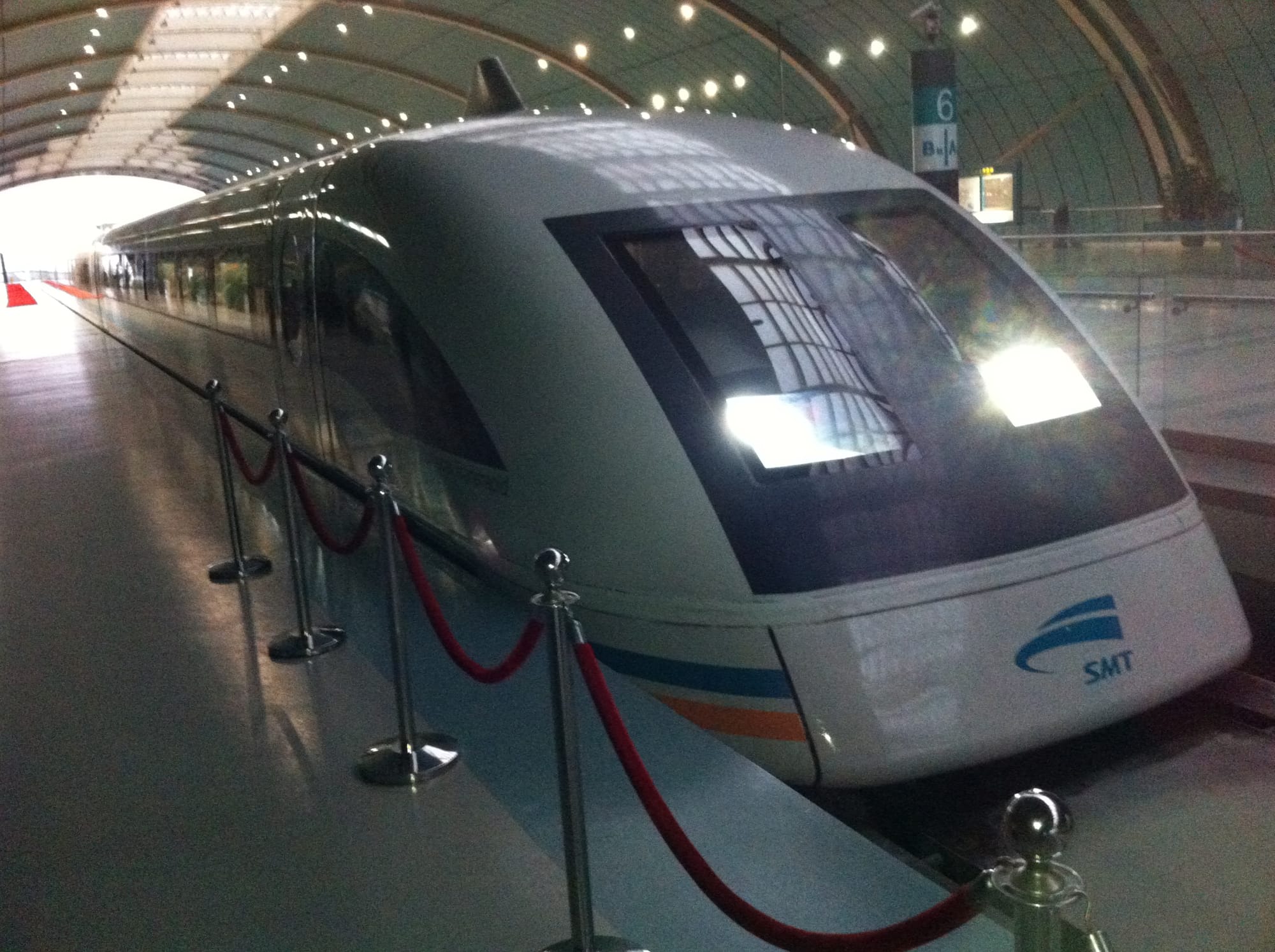
Outside of North America, you can count on high-speed meaning a minimum of 186 miles (300 kms) per hour. China has lately upped the ante to 400 km/h on much of its mainline network, and railfans there are reporting sightings of the new CR450s, whose top-speed is contained in the name: 450 kms (280 miles) per hour. The fastest I've ever gone in a train, in fact, was on the mag-lev from the Shanghai airport to Pudong, where I watched the in-car speedometer hit 430 km/h. HSR, without the fancy, and energy-sucking, levitating magnets, has long been capable of more than that: a French TGV still holds the speed record (see above) for passenger rail, 574.8 km/h, set in 2007.
I'm happy to report that things are about to change for the better. The first private passenger line in the United States in the 21st century, Florida's Brightline, now achieves speeds of 125 miles (200 kms) per hour between Orlando and Miami. Joe "Amtrak" Biden and his transportation secretary Pete Buttigieg made sure that billions from the Bipartisan Infrastructure Law got to the national rail operator. Upgrades on the Northeast Corridor means that the Avelia Liberty, the next generation of high-speed trains, due to start running this spring, will attain 160 miles (257 kms) per hour, reaching that minimum definition for true high speed. Ground was broken on Brightline West in spring 2024, and the smart money is saying that, if it reaches its deadline to link Vegas to Los Angeles in time for the 2028 Olympics, it will be the first true HSR line on this continent, with trains operating at 186 miles (300 kms) per hour on its straight shot along Interstate-15.
Donald Trump, interviewed by Elon Musk on Twitter/X before his re-election, said: “The bullet trains go unbelievably fast, unbelievably comfortable, with no problems. We don’t have anything like that in this country. Not even close. And it doesn’t make sense that we don’t. It doesn’t make sense.” Musk is no friend of high-speed rail—he admitted to one of his biographers that his hyperloop was explicitly conceived to kill funding for California’s bullet train—and Trump’s second presidency is almost certainly going to put some publicly-funded projects in peril; the recent revival in Amtrak's fortunes is likely to be short-lived. Yet industry insiders continue to see a strong future for high-speed rail—especially lines built and operated by private companies. And, looking a little farther down the line, there's almost certainly going to be more passenger rail in North America's future; it's a proven technology that is too good to be sidelined, especially in the midst of our ongoing climate breakdown.
And, in Canada, the federal government announced in late November it was green-lighting high-speed rail (as opposed to just high-frequency rail) on the all-important route between Montreal and Toronto. Given the turmoil following Justin Trudeau's announcement he wasn't running for re-election, there hasn't been much in the way of a follow-up on this announcement. Many were left wondering what happened to Windsor, Quebec City, and Ottawa, which are traditionally considered part of "The Corridor," the diagonal slash across Ontario and Quebec that is home to half of Canada's population. Even though waiting for the arrival of better train service has become a national pastime, as well as a national joke, I'm bullish on the future. Even the Conservatives have included inter-city high-speed in their official platform.
Why is speed important when it comes to inter-city rail? Apart from national pride, and the boasting rights, there are a few very practical reasons. I'll be covering them all in an upcoming HIGH SPEED post.
THE LATEST PASSENGER RAIL NEWS:
Zone 3: The Americas
In the waning days of the Biden presidency, the Federal Railroad Administration announced that $146 million was going to service improvements on four state-supported Amtrak routes (including California's beloved Pacific Surfliner, and the instantly popular Borealis, launched last summer to connect Chicago and the Twin Cities), Connecticut’s CTRail, and Florida’s Brightline. When it comes to infrastructure these days, that's a pittance, but keep in mind that's in addition to $1.1 billion in FRA funding for 123 grade-crossing improvement projects nationwide. That's the kind of unglamorous work that can make a big difference in the long run. Here's the link to the report from Trains Magazine.
Zone 2: Europe and Africa
Deutsche Bahn has started running high-speed ICE trains between Berlin and Paris. The new link takes less than eight hours; before, it took over ten, and involved a change. I remember taking a bus—on the highway—when I had to get from Berlin to Paris in the 1990s. That seems insane to me now. The train tickets go for as little as €59. More details from EuroNews.
Zone 1: Asia and the rest of the world.
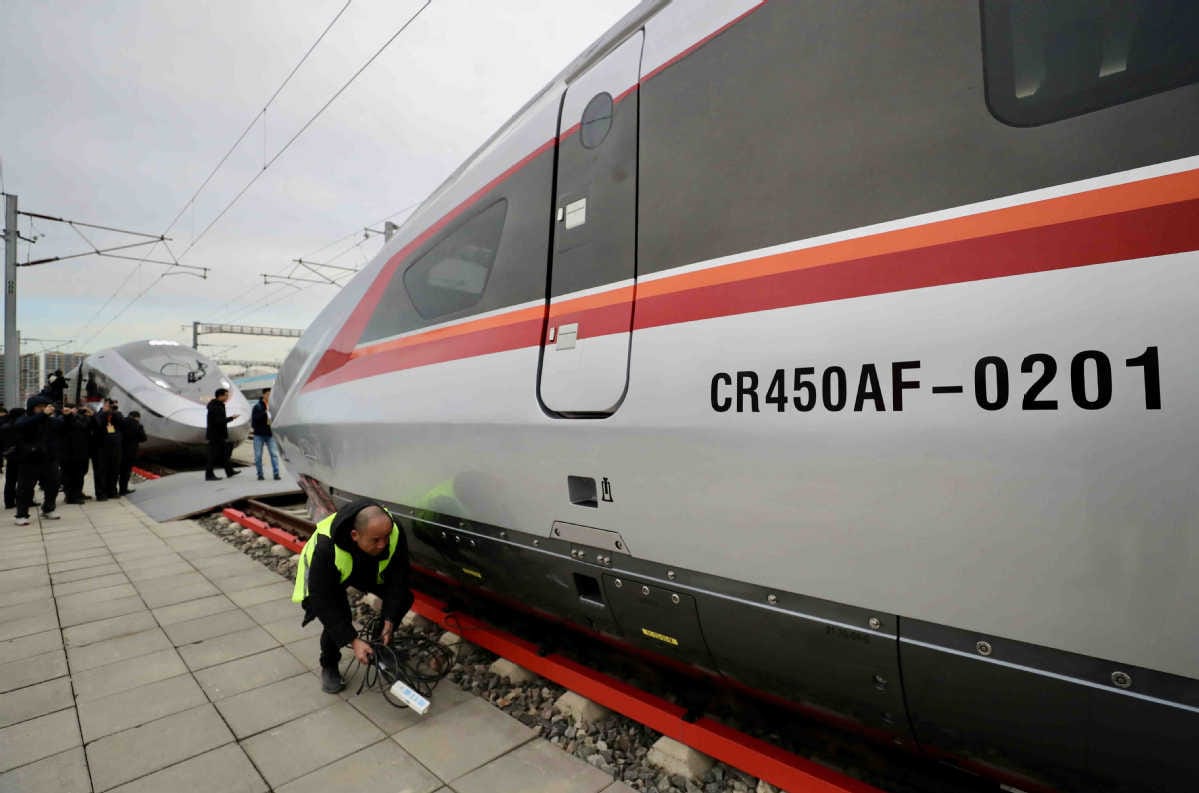
The social networks are reporting sightings of China Railways CR450, which is already cruising comfortably at 400 km/h. The 450 in the name, though, refers to its very impressive maximum speed. Here's the announcement from the very official China Daily.
(1) Pace William Gibson.