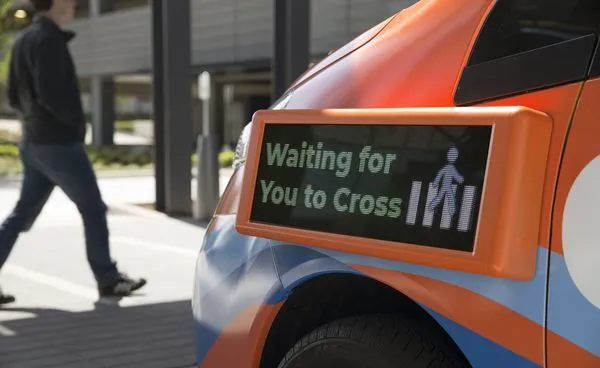
// I suppose I registered the fact that, late in 2023, a self-driving car in San Francisco had hit a pedestrian, leaving her in critical condition. But it wasn't until listening to this week's Hard Fork podcast that I became aware of all the horrific details.
For years now, the streets of San Francisco have been a testing ground for Silicon Valley transport tech. A lot of these er, innovations, show up in other cities. Once the local authorities become aware of them, they usually end up vanishing pretty fast. In the last decade, I've seen Uber's e-bikes come and go from the streets of my city, Montreal. The same happened with Car2Go, which filled the curbs with blue-and-white Smart cars for hire. And there have been a whole range of e-scooters, littering the sidewalks like pick-up-stix, with names of California start-ups that no longer exist. (What has persisted are the well-run, community-oriented mobility solutions: in Montreal, the Communauto carshare network, and Bixi, our pioneering bikeshare system, which puts bikes in stands, rather than littering them over sidewalks.) When I learned that two companies were competing to offer self-driving (or autonomous, or driverless) taxi services, I wasn't particularly surprised. But I said to myself: this ain't going to last.
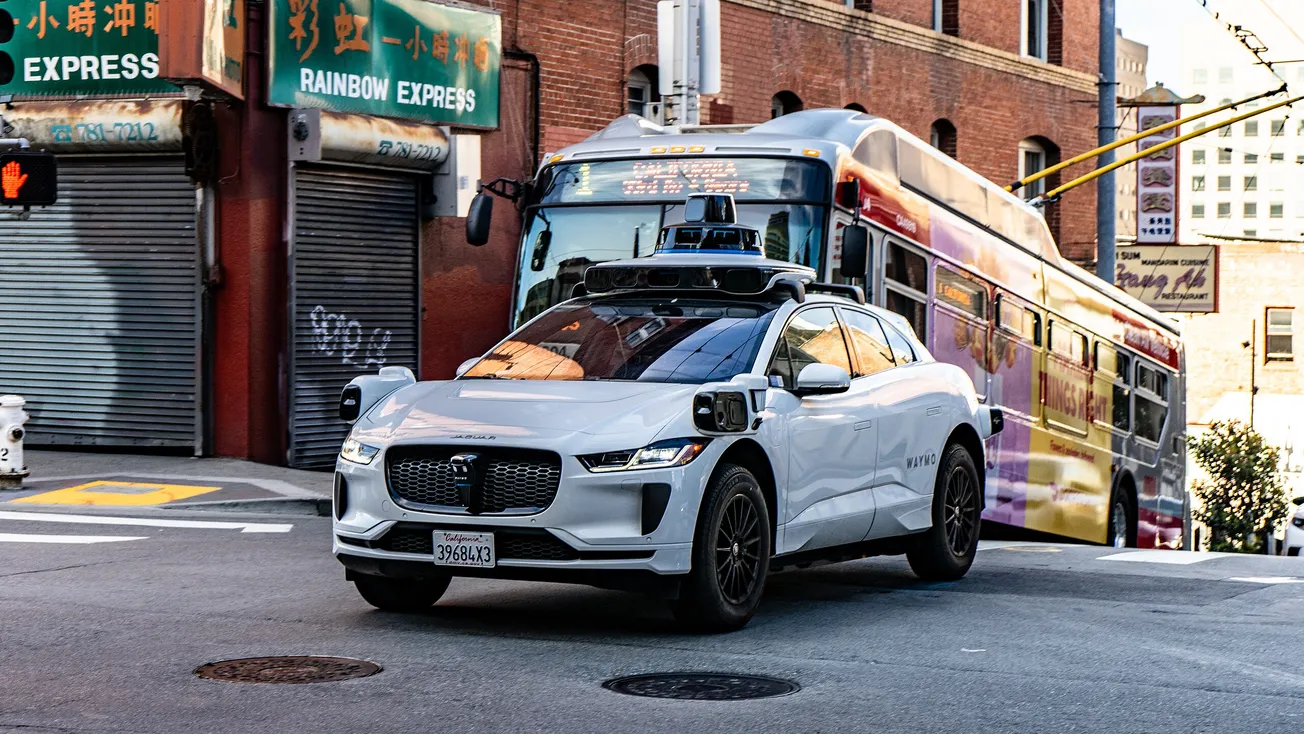
Here's what happened. Back in August 2023, the California Public Utilities Commission voted to allow two companies—Cruise, a subsidiary of General Motors, and Waymo, owned by Alphabet—to operate so-called Robotaxis in San Francisco. By using a smartphone app, people could call up an Uber-like taxi service—but when the car appeared, there would be no driver. (Apparently this immediately led to a whole lot of late-night sex in the backseats; sex that was recorded for posterity by onboard video cameras...) Activists soon discovered that these Robotaxis could be immobilized by the simple expedient of placing one of those orange plastic safety cones on the hood or roof. But apart from such interventions, the first reports indicated that these things were doing their jobs pretty well, getting people to restaurants, home, and work, safely.
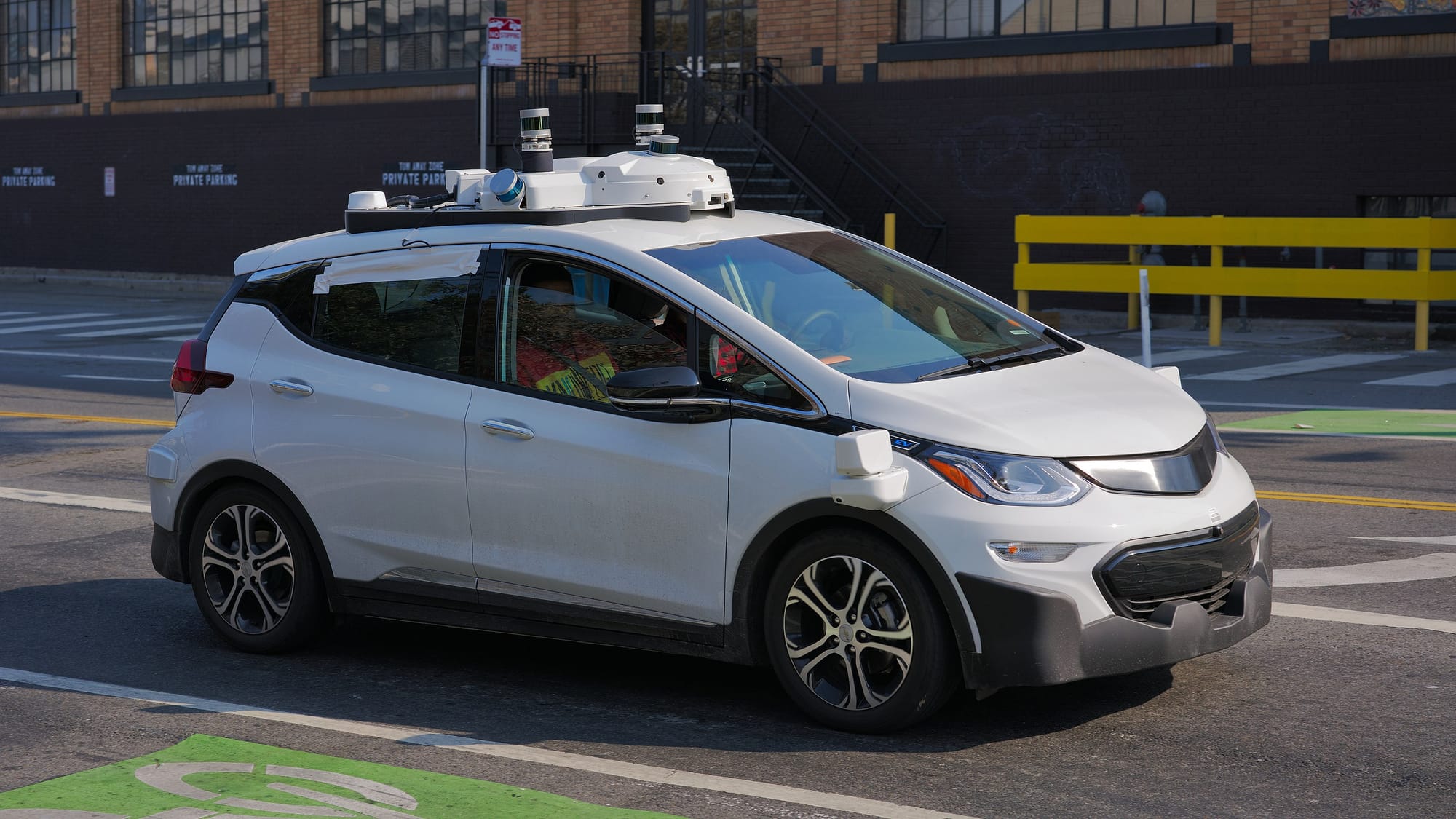
Here's what happened: on October 2, a car, driven by a human, struck a woman who was crossing a San Francisco street. The impact threw her into another lane, where she was struck by an oncoming self-driving Cruise car. The Robotaxi apparently braked hard, but then it did something no human driver would do: following what it's programming told it to do after any crash, it proceeded to pull over to the side of the road. Unfortunately, there was a human being under its tires, and she was dragged 20 feet to the curb. She had to be freed from under the car with the jaws-of-life, and was sent to the hospital in critical condition.
Cruise made the situation worse for itself by failing to disclose to investigators the fact that their own sensors had clearly shown the woman's injuries had been aggravated, after the initial impact, when she was dragged to the curb.