Skip to content

Winter? What Winter?

When Our Transport Systems Struggle with Climate Breakdown

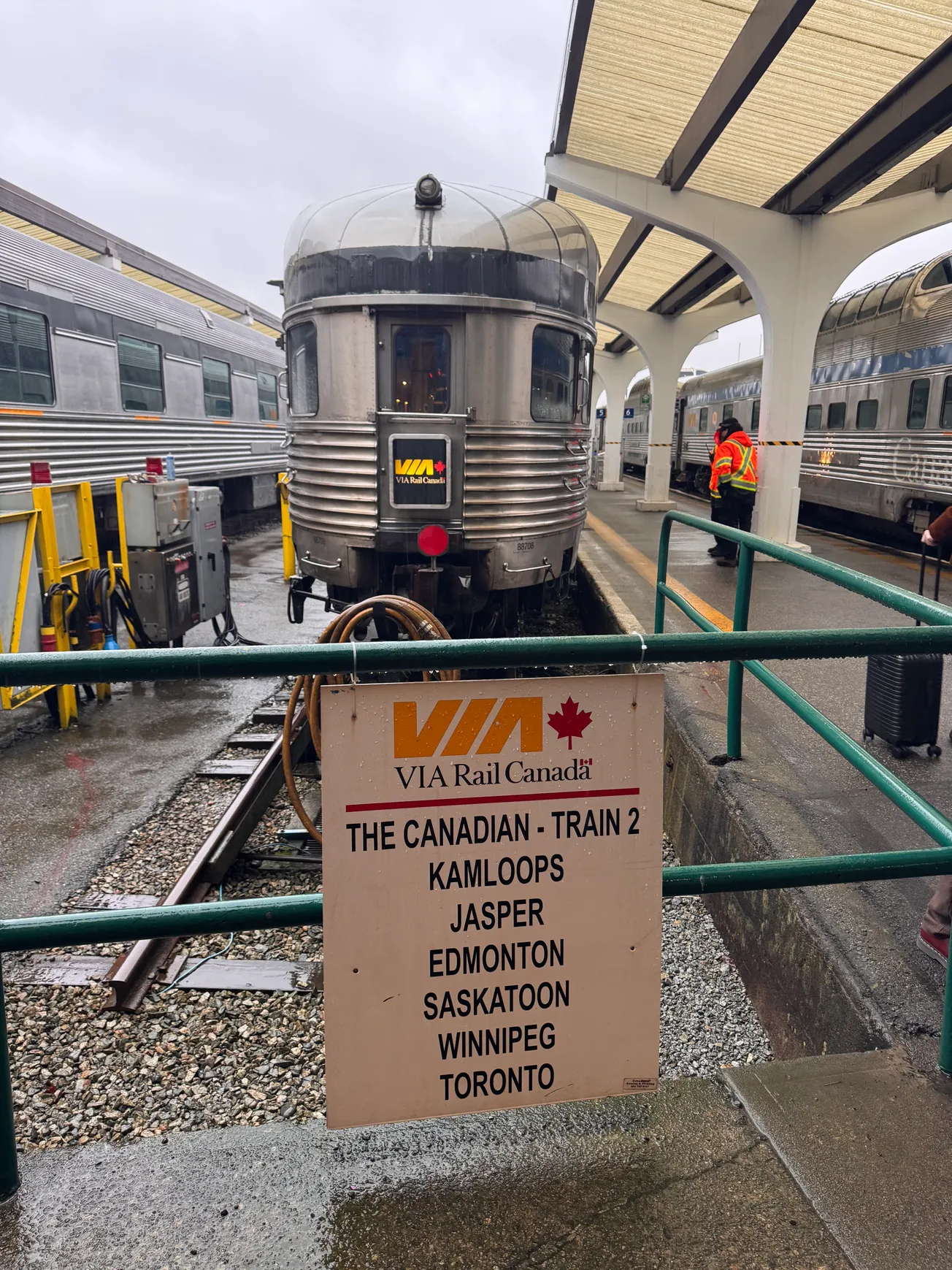
Last week I crossed Canada, from Vancouver to Toronto, and then onwards to Montreal, entirely by land. It was a 5,000-kilometer journey on two VIA Rail trains, the first being the storied, twice-weekly The Canadian. The second, Train 68, was a much more prosaic "Corridor" train, one of a half dozen scheduled between Toronto and Montreal that day. I'll be writing in much more detail about this journey—and, in this case, the word is apt—in this space at a later date. For now, I want to address something that has been front of mind for myself—and a lot of people in North America—and which I saw a lot of on The Canadian.

In a word: Winter.

I've been doing some hard thinking about the impact that winter weather has on the way we get around, especially the sustainable modes of transportation (trains, transit, bicycles and other forms of active transport) that we need to be bolstering as we go forward in this century.

The rumours of the death of winter have been greatly exaggerated. The planet is indeed warming, and quickly, but, as climatologists have been trying to tell us for decades now, that doesn't necessarily mean that winters are getting milder. Depending on where you live, in fact, winters might get a lot colder. As people in Minneapolis, New York, Atlanta, and Miami can testify, that's definitely the case for the winter of 2025/26, which has brought freezing temperatures, and unusual amounts of ice and snow to even the sub-tropics. In Montreal, where I live, it started to snow in mid-November, and we've had long bouts of -20 C weather.

"Global warming" doesn't really capture what's going on; and "climate change," while accurate, is too neutral sounding. I think the Scottish environmental writer Robert Macfarlane is right to refer to what's going on around the world as climate breakdown. The weather patterns we've depended on since the end of the Holocene, providing the stability to nurture human civilizations, can no longer be relied upon.

Winters have been getting perceptibly milder in eastern Canada for the last couple of decades. January and February used to be reliably sub-zero months in Montreal. Lately, though, there have been wild swings to well above zero, often for days on end, in which all the snow and ice melt, followed by a return to deep-freeze. These kind of oscillations can play hell with your mood, and your health. It's easier to get sick when, from day to day, you don't know whether to dress for an Arctic freeze or a spring thaw.

💡
At this point, you may be asking yourself: What do Siemens inter-city trains, Montreal's REM light-metro, and urban bike lanes have in common?

Now, here's the problem: I think these somewhat milder, if less predictable, winters have lulled people in southern Canadian cities into thinking that harsh winter weather is on its way out—and that's had an impact on our long-term thinking about transportation.

Before boarding The Canadian, I spent the last two weeks of January in Vancouver. The Pacific Ocean is in its El Niño phase, which tends to mean drier, warmer winters on the coast of British Columbia. In my first week in Vancouver, there were highs of 10 degrees C, and the skies were clear—so much so that the northern lights could be seen from local beaches and hilltops. This was a sharp contrast to Quebec City, where I'd been earlier in the month, and where I'd donned my heaviest parka to brave temperatures in the -2o C range. I grew up in Vancouver, and, believe me, ten days of sunny conditions in January are incredibly unusual.


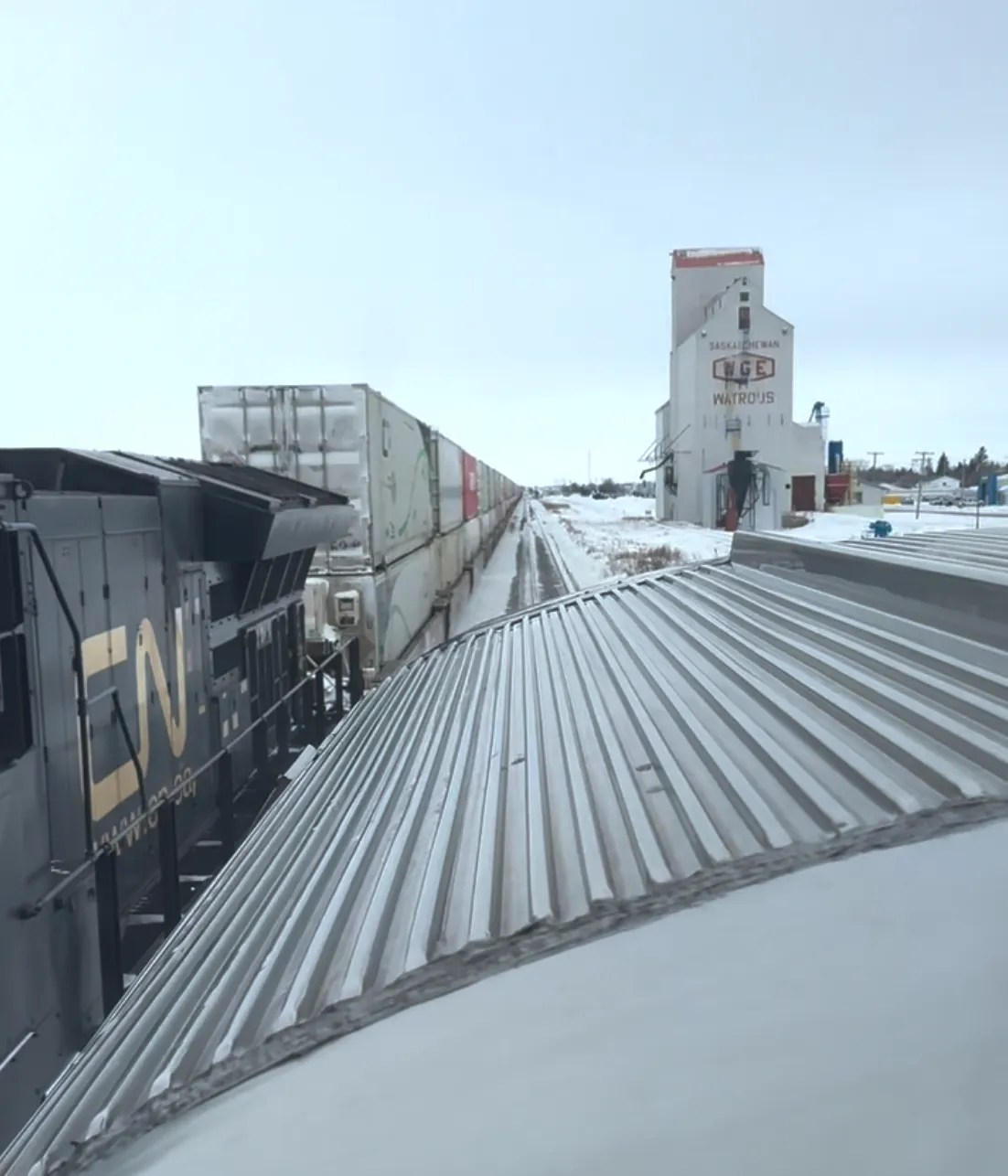
By the time I boarded the train, Vancouver had reverted to type, with days of heavy rainfall. After my first night in the train, I wasn't surprised to wake up in a snowscape in the Cariboo Mountains. What I didn't expect to be the landscape to be almost snow-free, and temperatures well above freezing, before, in, and after our stop in Jasper. East of Edmonton, I was back into a familiar Canadian winter landscape of snowy plains and ice-covered lakes. That lasted pretty much until Toronto, where it was cold enough, but where the streets were clear of snow.

0:00
/0:26

Watch the cyclist struggling with the snow in this Toronto bike lane; I filmed this from the College St. Streetcar

Well, mostly clear. It was ten days after a major, headline-making snow dump, and somehow the bike lanes on all but a few major thoroughfares in Canada's largest city were still filled with snow. From my seat on the College streetcar, I watched a few cyclists try to brave the mess in the bike lanes, before opting to tangle with traffic on the street, or weave through pedestrians on the sidewalks. My first thought was: that's something you might have expected to see under a Rob Ford mayoralty, but wasn't Olivia Chow, the current mayor, vociferously pro-bicycle? Hadn't she shown up for her inauguration on a bike? If that was more than a photo op, where was the follow-up on deploying the plows to keep people riding?

My train trips had also got me thinking about our failure to cope with winter. I'd been having long conversations with well-informed people, from the rail industry, on the trains about the current troubles facing the latest-generation rolling stock being used by VIA Rail. The national passenger rail operator now has 32 Siemens Venture trainsets (pulled by Charger locomotives). Amtrak also uses Charger locomotives; when I rode on The Floridian, from Chicago to Miami, which I write about here, my sleeper was pulled by a Charger locomotive. (I also realized that the privately-run Brightline train, which I write about here, that I rode from Miami to Orlando, was pulled by a Siemens Charger; they'd stuck a nose cone on the front, apparently to make it look more sleek and "high-speed.") VIA Rail signed a $989-million contract to obtain these trainsets, which are manufactured at the Siemens plant in Sacramento.

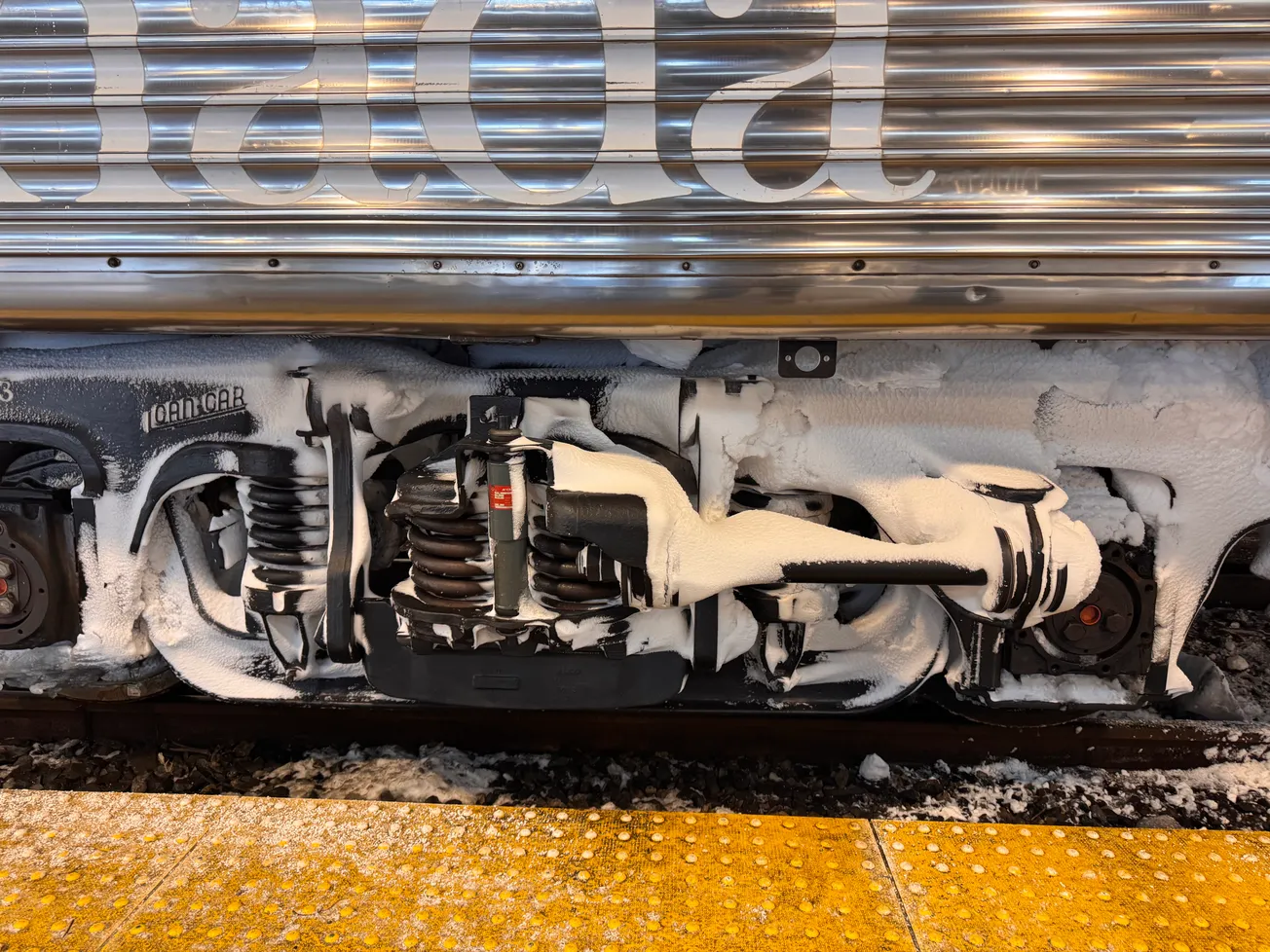
Now, California most certainly isn't eastern Canada; what works in the Lower 48 won't necessarily work in the Great White North. The news has been full of headlines of the failure of Siemens Charger locomotives in Ontario and Quebec. The first I heard of it was in early December, when 300 people remained blocked for 12 hours in a Siemens train near Brockville, between Toronto and Ottawa. The issue, apparently, is tied to snow blowing into the locomotives, which causes the train to slow down. Engineers stop the train after the slow-down, and try to restart it, but that doesn't always work. While the lights in the passenger cars remain on, the heating shuts down—not an ideal situation in a frigid Laurentian winter. Apparently fleet availability has been decreased by 50 percent this winter, with lots of runs completely cancelled.

Frankenstein train: an old diesel-electric locomotive hauling new Siemens Venture passenger cars.

Canadian locomotives were once legendary for their robustness. Going back to the days of steam, European visitors were astonished by the sheer bulk of the trains that crossed prairies and Rockies. VIA Rail's long-distance fleet still relies on massive diesel-electric locomotives; on The Canadian, the seventy-year-old passenger cars I rode on were pulled by a pair of GPA-30H locos, 3,200-horsepower brutes originally built by General Motors in the 1970s and 80s. The new Chargers are also diesel-electric, and are equally heavy. But, for some reason, they're struggling with pretty standard winter conditions in eastern Canada. This has led to an absurd situation: bulky 1970s-vintage GM locomotives are being pulled out of storage (where some are in a pretty poor state of repair) in order to haul much narrower Siemens Venture trains, since the Siemens Chargers are failing to do the job.

Are these teething pains for a relatively new fleet? Maybe, but Siemens Chargers have been on the tracks for the last decade.

"Teething problems" is also the explanation being advanced to account for the ongoing problems with the Réseau express métropolitain, Montreal's automated light-metro system, which now counts 26 stations. These are also linked to winter weather. There have been a series of network-wide outages on the REM since it launched its extension to Deux-Montagnes in November, which I wrote about here. Commentators have been cutting the REM some slack, by pointing out that this is proving to be a particularly extreme winter. The Montreal métro system is sheltered from these issues because of the simple fact that it is entirely underground. Construction of the métro began in the 1960s, when there was no question about the severity of Montreal's winters. Like Vancouver's SkyTrain, much of the REM runs outdoors. That's fine if all you have to cope with is rain—but Montreal is one of the snowiest big cities in the world (second, in fact, only to Sapporo, Japan, where—rather unusually—some metro lines run through transparent, above-ground tubes). To be fair, the REM seems to be coping with these issues better than it did when the first part of the network opened in 2023, and much better than Ottawa's O-Train did when it started running.

This is a bike lane? St. Urbain Street, Montreal, on Feb. 10, 2026.

Like Toronto, Montreal is also failing in an area where it once had bragging rights. Under the mayoralty of Soraya Martinez Ferrada, who ran on a platform of auditing and removing existing bike lanes, snow removal in bike lanes has been de-prioritized. As I write in this post, I'm a winter cyclist, and getting around—even with studded tires—has been a hard slog this year. (Even more so after my winter bike was stolen in the middle of the night, off our front porch, by a cursed bicycle thief. But that's another story.) When Valérie Plante's Projet Montréal party was in power, bike lanes were often cleared of snow before roads. According to this article, the Ensemble Montréal budget slashed funds to maintain snow removal equipment from $45 million to $18 million. That means fewer plows, crushers and graders to clear the streets—apparently 300 of the 1,300 or so vehicles are in bad repair or completely off the job. First to suffer are pedestrians and cyclists. The photo above shows the Rue St-Urbain bike lane two days ago—note the bike-rider forced into the street with drivers, who benefit from a cleared road.

At this point, you may be asking yourself: What do Siemens inter-city trains, Montreal's REM light-metro, and urban bike lanes have in common? I believe that the fact that all of these modes have experienced challenges in keeping people moving this winter come back to the same cause: a failure to acknowledge the fact that winter, though in some years it may be milder, has by no means gone away. Canadians have been lulled into the sense that the long, frigid winters of the twentieth-century are long gone. But this denies the reality of climate breakdown: we have no idea what is coming. As we've seen, the polar vortex can mean long bouts of freakishly cold weather—even in places that are supposed to never get cold. While I was on The Canadian, I talked to a freight conductor from Georgia, who was shocked to see that the ever-shifting polar vortex was bringing five inches of snow to his state, and temperatures down to freezing in Miami.

Look, I imagine VIA Rail is going to solve its problems with its Charger/Venture equipment; if you go back in time, even those GM locomotives went through their share of operating challenges back in the 1970s and 80s. And the REM will probably overcome its issues with winter-weather operation; too many billions have been invested for them not to be solved. But I think we could save a lot of hassle, and money, if we acknowledged that winter hasn't gone away—and make our long-term decisions about cities and railways with harsh weather in mind.

THE LATEST PASSENGER RAIL NEWS

Zone 1: The Americas

It looks like Amtrak's new Airo trainsets will run on Cascades route, calling at Seattle and Vancouver, in time for 2026 FIFA World Cup. Capable of 200 km/h (125 mph), with panoramic windows, + fetching forest-green livery. (Alas, still powered by diesel, not overhead wire.) There is some question about how willing Canadians will be to cross the U.S. border, even for an event as alluring as the World Cup. (Here's the link.)

Comments

Latest

Waymo Trouble

Waymo Trouble

Robotaxis are Being Sold as Better in Every Way than Cars with Human Drivers (But don't try to tell that to Kit Kat)

Members Public