There are no ads on the HIGH SPEED newsletter, and there never will be. It's entirely supported by readers like you. I publish it on Ghost, because I don't like the way Substack platforms Nazis, fascists, and white supremacists. Unlike Substack, though, Ghost charges an annual fee. I want to keep HIGH SPEED going, but to pay that fee—which I'll need to do this month—and continue doing the research, travel, and writing (as well as buying the books I review!) necessary to keep this up week in, week out, I need your support. I hope you'll consider becoming not just a free subscriber, but a paid member. Your subscription will help me keep this train rolling. And to all those who have already helped out by becoming a Rail Pass Holder or founding member, thank you!
// Back in the mid-1950s, Canada had two cross-country trains. Riding on the Canadian Pacific Railway's The Canadian from Vancouver to Montreal took 71 hours and 10 minutes—three full days, over 4,506 kilometers, at an average of 63 kilometers an hour.
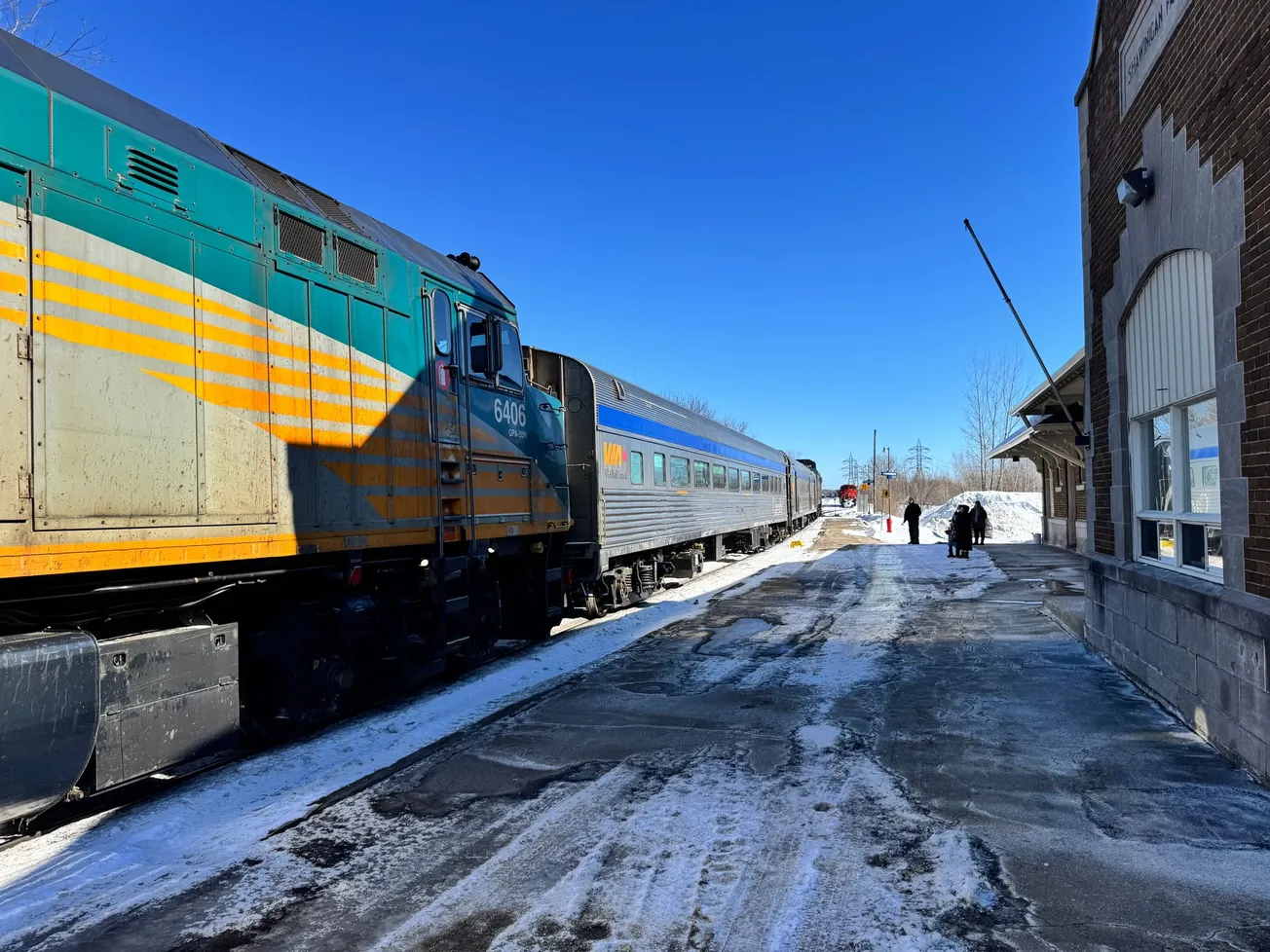
That may seem like a long time, but it's pretty speedy compared to the trip I took on VIA Rail's The Canadian earlier this month. Travelling from Vancouver to Toronto took 91 hours (and we arrived an hour earlier than our scheduled time!). And, after all that time, I still wasn't home. I had to wait at Union Station in Toronto for about five hours, and then it was another 5 hours until we arrived at Montreal's Central Station. Our average speed between Vancouver and Toronto was just 47 kilometers an hour, 16 km/h slower than the pace set by trains 70 years ago.
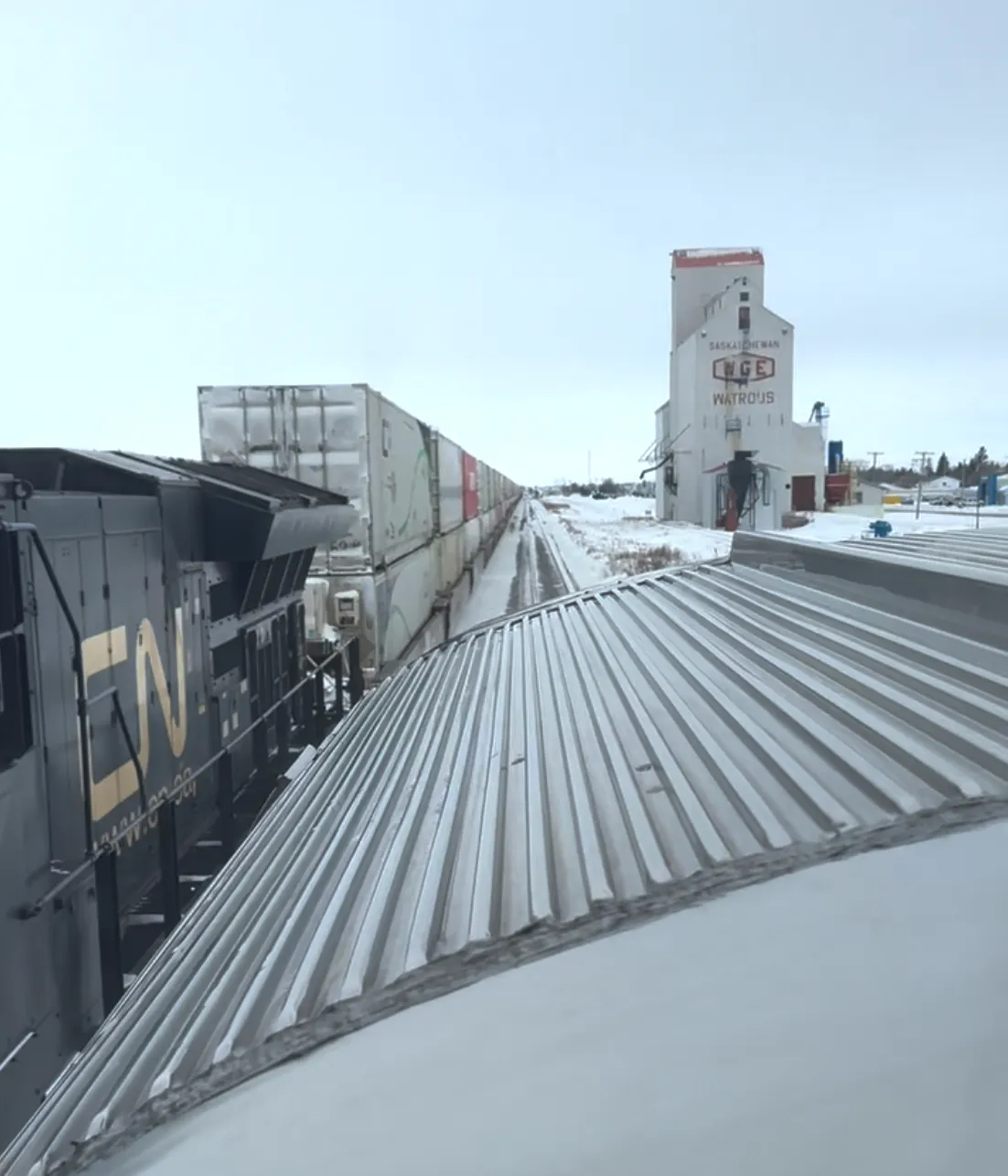
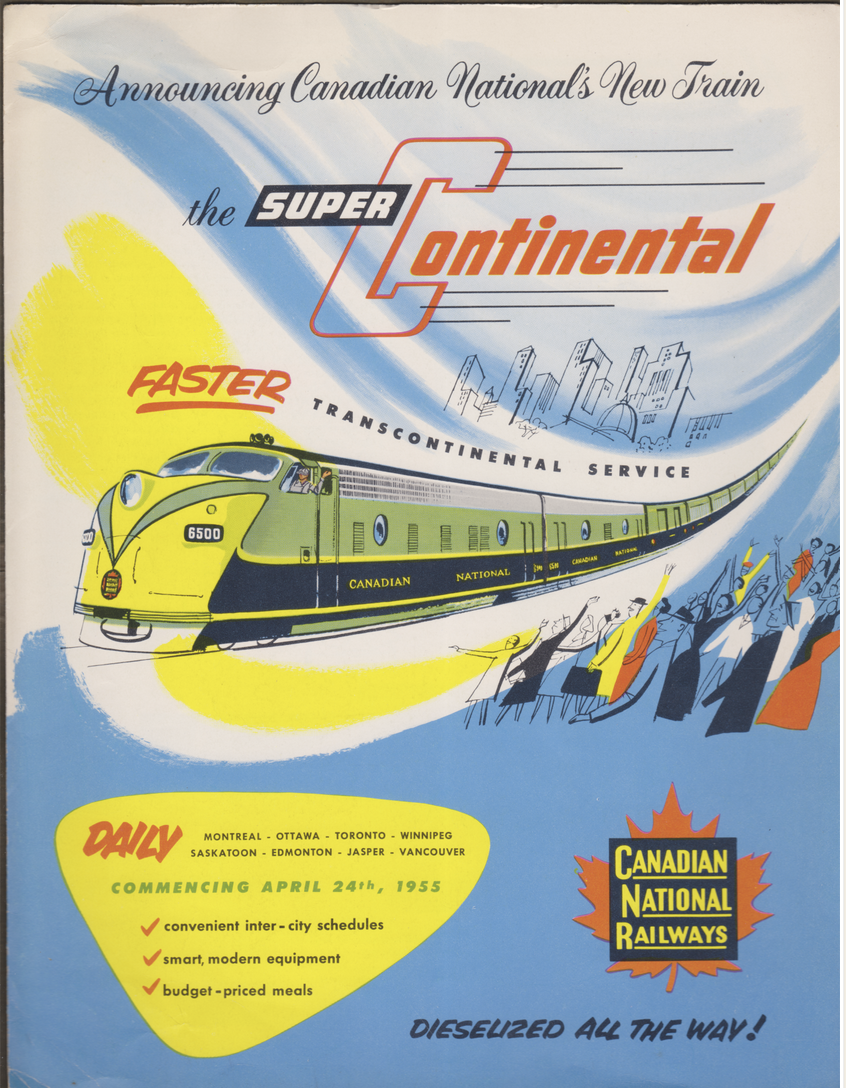
What changed? Well, back in the 1950s, CPR's The Canadian and Canadian National's Super-Continental, along with other prestige passenger trains, had absolute priority over freight trains. If you travel on a passenger train in Canada today, you absolutely do not have priority over merchandise-carrying trains. On my most recent cross-country trip, we spent hours and hours on sidings, waiting for slow-moving freight trains to pass. The passengers, some of whom had paid thousands of dollars for a deluxe Prestige Class cabin, complained. The staff commiserated, but told us there was nothing they could do. (One of the crew lamented, as we cooled our heels outside Saskatoon's tiny station: "It’s a huge yard, and CN doesn’t like us. I remember one night they kept us here two hours to move around two boxcars.") Today's Canadian is perfectly capable of faster speeds—I clocked it at 129 km/h on the Prairies—but its leisurely timetable was designed with freight-train-induced delays in mind.
Now, the average freight train these days is 250 cars long. I spent a lot of time staring out the window of my Room for One, or the Skyline Dome, at double-stacked containers, and hoppers, and tankers, and flatcars, pulled by trios of heavy diesel-electric locomotives (often with other locos thrown in mid-consist for added hauling power).