There are no ads on the HIGH SPEED newsletter, and there never will be. It's entirely supported by readers like you. I publish it on Ghost, because I don't like the way Substack platforms Nazis, fascists, and white supremacists. Unlike Substack, though, Ghost charges an annual fee. I want to keep HIGH SPEED going, but to pay that fee—which I'll need to do early in 2026—and continue doing the research, travel, and writing necessary to keep this up week in, week out, I'm going to need your support. I hope you'll consider becoming more than just a free subscriber, but a paid member. Your support will help me keep this train going on. And to all those who have already helped out by becoming a Rail Pass Holder or founding member, thank you!
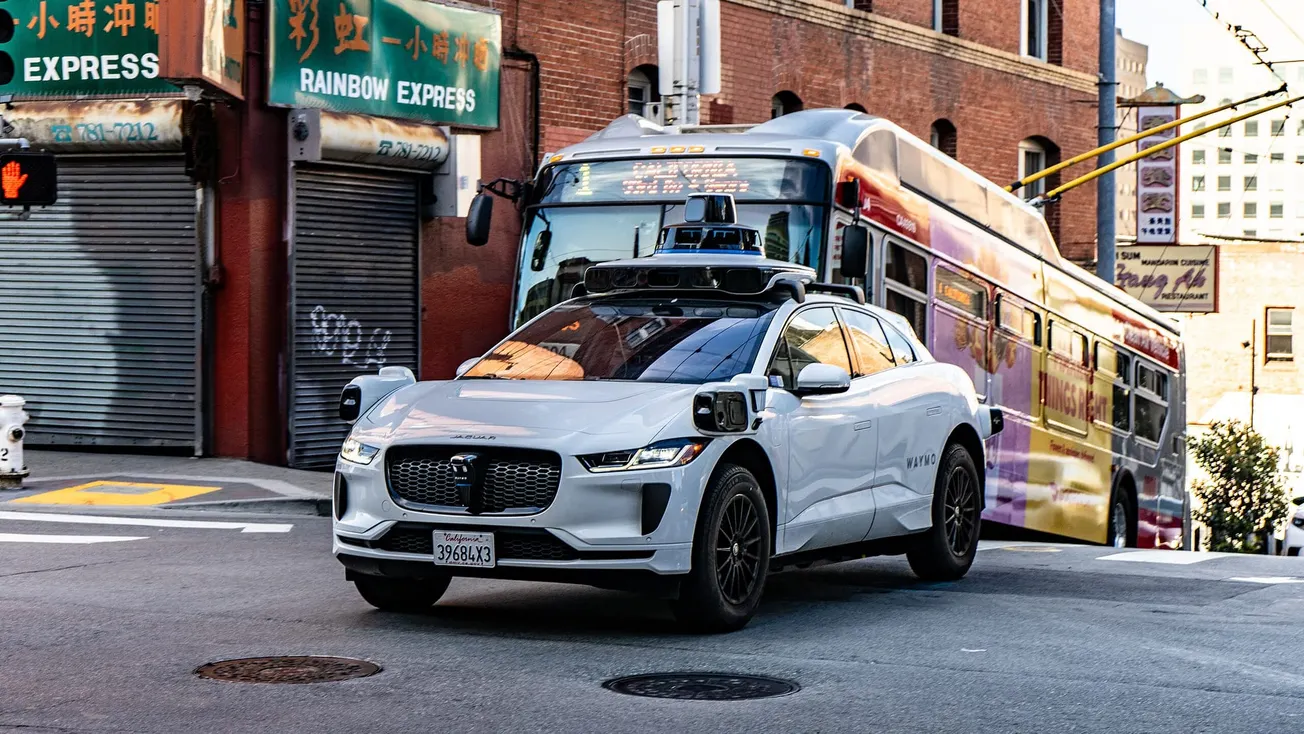
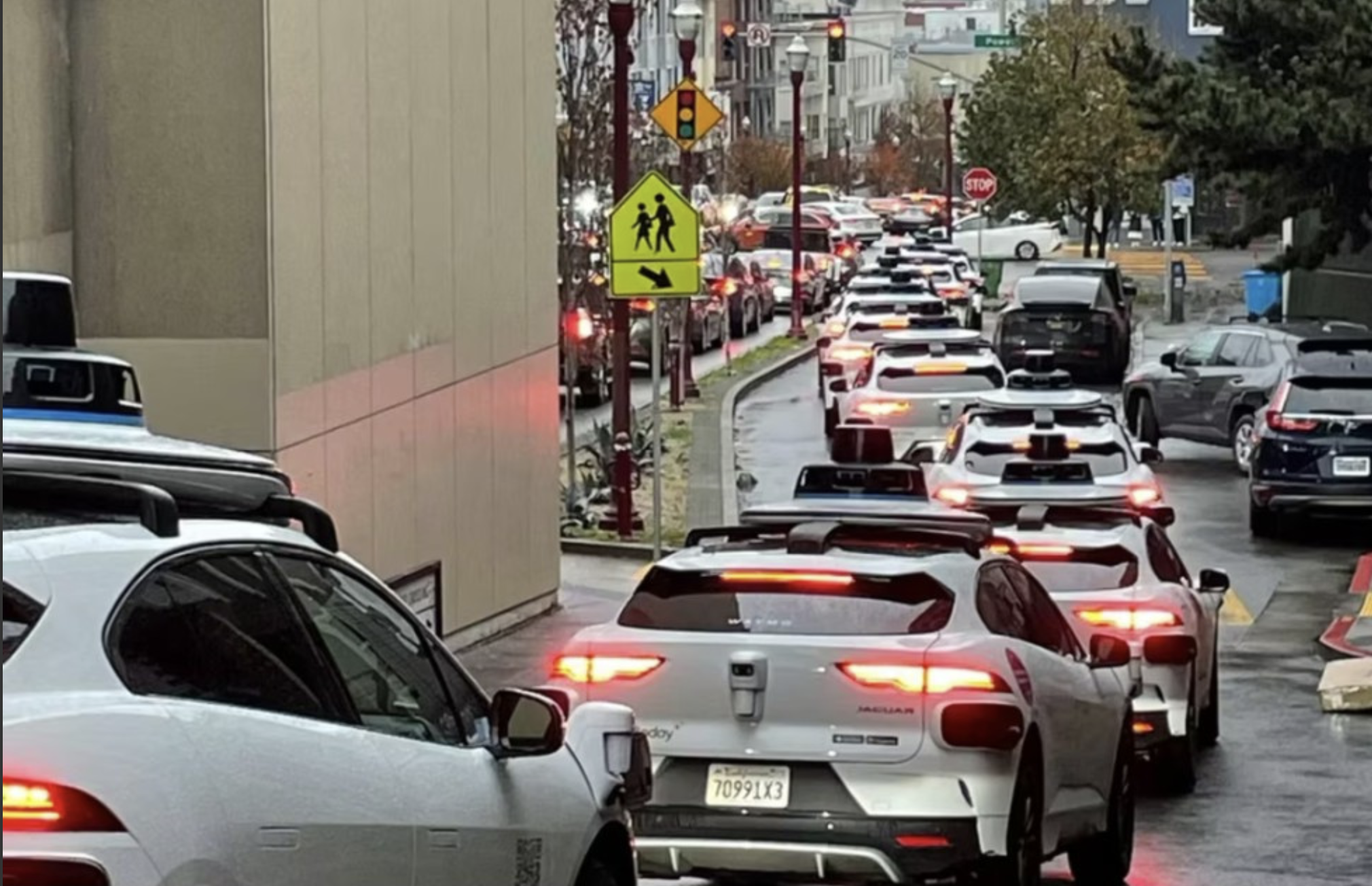
// On Dec. 20, 2025, a fire in a Pacific Gas & Electricity sub-station knocked out the power supply to a third of the city of San Francisco. Signals went dark, causing traffic to slow to a crawl, and then stop altogether. With a bit of patience and care, drivers were able to navigate the uncontrolled intersections. But one class of vehicles utterly failed to cope with the chaos. These were the "robotaxis" of Waymo, the apparently autonomous cars-for-hire that have lately flooded the streets of San Francisco, and are now showing up in Los Angeles, Phoenix, and Houston. Suddenly, as this video shows, hundreds of white sedans turned into immovable bricks, each weighing in at three and a half tons, that blocked crosswalks and city streets at a time San Franciscans were eager, and sometimes desperate, to get home.
You may recall that another AV company, Cruise, was operating robotaxis in San Francisco. As I wrote in this post, in October 2023 a Cruise vehicle ran over a pedestrian, and then, instead of simply stopping, followed its programming and rolled 20 feet to the curb, dragging its victim with it, worsening the injuries. After this incident, which resulted in a $10-million settlement paid to the survivor, General Motors closed its Cruise division in December 2024.
You might figure that would be the end of driverless cars in San Francisco. But that means you don't know San Francisco, whose current occupants never met a gadget they didn't like. Waymo, a subsidiary of Alphabet, Google's parent company, currently operates a thousand robotaxis on the streets of San Francisco.
It sounds like a ride in one of Waymo's Jaguar I-PACE electric vehicles is a pleasant enough experience. Some women reportedly prefer the cars to using taxis with human drivers, with their attendant risk of harassment or aggression. Parents send kids to school and sports practise in Waymos, saving themselves the chauffeuring duty (but also the time they might spend talking to their offspring).