There are no ads on the HIGH SPEED newsletter, and there never will be. It's entirely supported by readers like you. I publish it on Ghost, because I don't like the way Substack platforms Nazis, fascists, and white supremacists. Unlike Substack, though, Ghost charges an annual fee. I want to keep HIGH SPEED going, but to pay that fee—which I'll need to do early in 2026—and continue doing the research, travel, and writing (as well as buying the books I review!) necessary to keep this up week in, week out, I need your support. I hope you'll consider becoming not just a free subscriber, but a paid member. Your subscription will help me keep this train going on. And to all those who have already helped out by becoming a Rail Pass Holder or founding member, thank you!
// I read a few books that changed the way I think about the world in 2025, but at the top of the list is More and More and More: An All-Consuming History of Energy, by Jean-Baptiste Fressoz, an historian of technology at the Centre nationale de la recherche scientifique in Paris. (The original title, Sans transition, is almost as good as the English one—it alludes at once to Fressoz's main thesis, and the French expression denoting a non sequitur.) It's an ironic, and very sobering, Gallic antidote to a program set out in another of last year's big non-fiction "idea" books, Abundance by Ezra Klein and Derek Thompson. (More on that later.)
Here's your executive summary: When it comes to energy use, carbon emissions, and the environment, shit is going even worse than we thought.
Of course, this is something anybody still concerned about the fate of the earth will have already intuited. The coming of Trump 2.0 seems to have signalled a near-complete global abandonment of the so-called green agenda. By the end of this month, January 2026, the world's largest emitter, and super-power, will have scuttled all its commitments to the Paris Climate Agreement. As in foreign policy, the U.S. is actively becoming a global bad actor, turning its back on renewables, making climate-denial into federal policy, firing scientists and ending data collection, and, oh yeah, promising to pump as much heavy crude oil out of the once-sovereign nation of Venezuela as it can (providing it can get American oil companies to join the program, which is by no means a given). This seems to have pushed other countries into survival-of-the-fittest, drill-baby-drill mode. My own country, Canada, is all-in when it comes to pouring government expertise and funding, through the auspices of the Liberals' new Major Projects Office, into new resource extraction schemes and pipeline construction. (The Alto high-speed rail line is one of the few projects that could actually reduce Canada's emissions—at least in the long run.) The rest of the world is following a similar path. The thinking, I guess, is that, compared to Trump's Mob Boss approach to international affairs, and the emergence of death squads and concentration camps for brown people in what was once the world's City on a Hill, the total collapse of the Ross Ice Shelf might seem like, if not a minor inconvenience, at least a welcome distraction.
But, if we flash back just a year or two, the dominant progressive narrative maintained that—given enough international cooperation, good will, and younger-generation energy—we could lick the world's environmental problems through innovation and something called the "energy transition." This was backed up by statistics showing that people were switching to electric cars, and that wind, solar, and other renewables were accounting for an increasing proportion of energy generation. This Polyanna discourse still pervades a certain kind of discourse—some people call it "solutionism," or the "California ideology"—that holds that once the little Trumpist blip is over, we'll get back to building a better future by ramping up the green economy and coming up with as-yet-uninnovated innovations that will solve all our problems (cold fusion? solar radiation modification?)
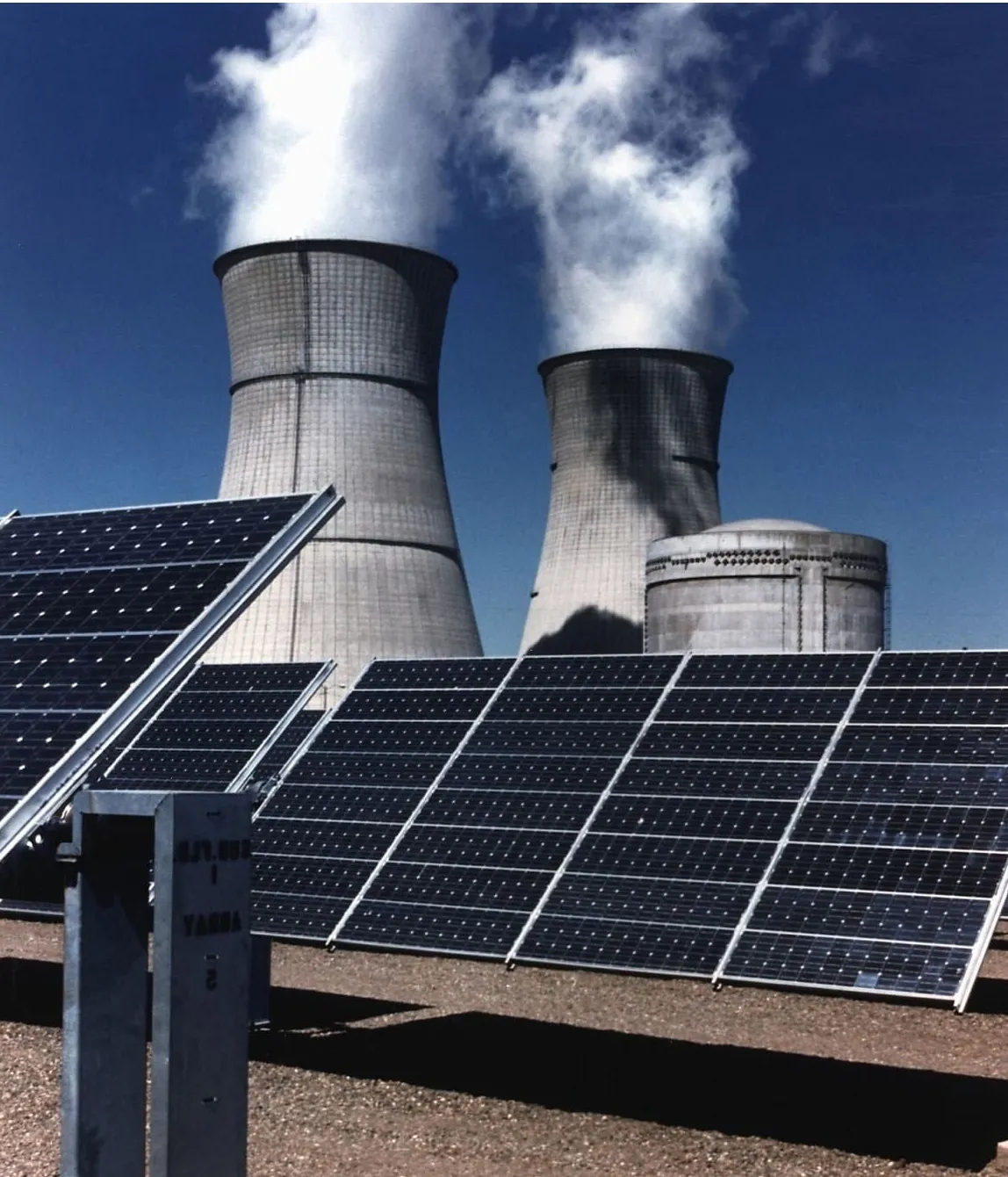
Fressoz splashes a bucket of well-chilled Evian over that Sunkist La-La land dreck. His main thesis is that there is no energy transition, and there never was one.