There are no ads on the HIGH SPEED newsletter, and there never will be. It's entirely supported by readers like you. I publish it on Ghost, because I don't like the way Substack platforms Nazis, fascists, and white supremacists. Unlike Substack, though, Ghost charges an annual fee. I want to keep HIGH SPEED going, but to pay that fee—which I'll need to do early in 2026—and continue doing the research, travel, and writing necessary to keep this up week in, week out, I'm going to need your support. I hope you'll consider becoming more than just a free subscriber, but a paid member. Your support will help me keep this train going on. And to all those who have already helped out by becoming a Rail Pass Holder or founding member, thank you!
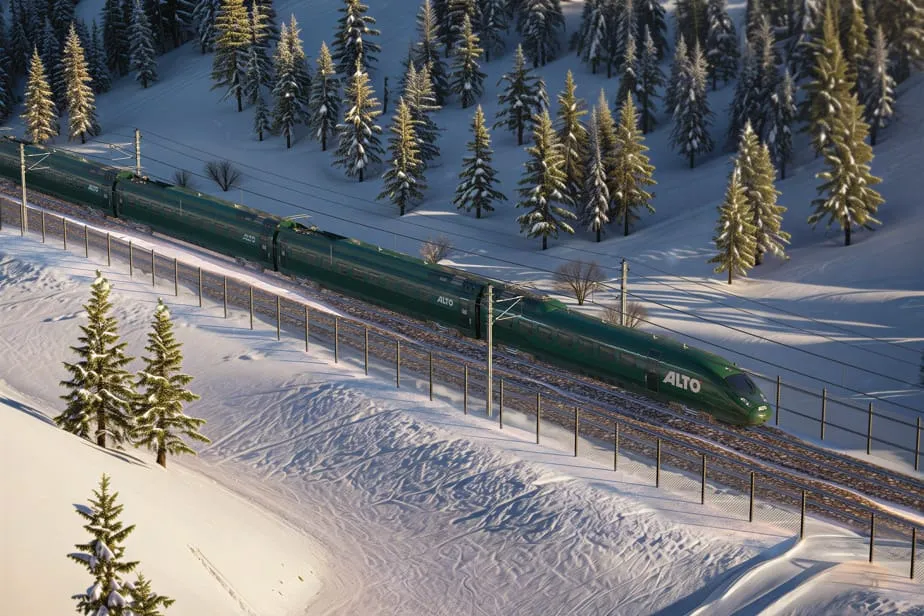
// For much of the twentieth century, Canada ranked as a world leader in both passenger and freight rail. In the twenty-first century, we remain one of the world's freight powerhouses, but we've fallen far behind in passenger rail. With the announcement in February of Alto, a near-thousand-kilometer rail corridor between Quebec City and Toronto, it finally looks like Canada is going to join the thirty or so nations around the world that already have high-speed passenger rail.
Until recently, the details of how—and where, and when—we were going to start building this hugely ambitious infrastructure project remained pretty vague. There were a few tentative maps online, which suggested trains would stop in Trois-Rivières, Laval, Ottawa, and Peterborough.
Earlier this month, Canada's transport minister, Steven MacKinnon, made things a little bit clearer. At a press conference, fittingly held in Gatineau, Quebec (right across the river from Ottawa), he announced that the first leg of the Alto project would link Canada's capital, Ottawa with Montreal, which is the most populous city in Quebec, and the second most populous in the nation. According to MacKinnon and Alto CEO Martin Imbleau, shovels would be in the ground in 2029.
Not surprisingly, this elicited social-media groans out of Toronto (see below), where people were already smarting from the dawning realization that the newly-opened multi-billion-dollar Finch West light-rail was slower than the buses it had been built to replace. (For a good analysis of just how left-behind Toronto has become in terms of public transport, I recommend this post from JR Urbane Transit, which starts with a homage to the "Toronto Tragedy" chapter of my book Straphanger. That said, the post's author writes that I supported the ill-fated "Transit City" project; I didn't, though I did quote transit blogger Steve Munro's retroactive endorsement of the proposed network of LRT lines.)

Others pointed out that getting from Ottawa to Montreal on existing VIA Rail trains, on a good day, takes just over two hours. And there's the fact that, even though the train takes about the same time as driving, and is even less time-consuming than a short-haul flight (if you factor in getting through security and airport transfers), Ottawa-Montreal just isn't a massively in-demand route.
Not yet, anyway.